Our customer support is available 24/7:


How To Start Real Estate Business: 2026 Step-By-Step Guide

You searched how to start real estate business, and Google handed you a wall of jargon about capital stacks, market segmentation, and brokerage models. Let's skip all that. This is the plain-English version for a real person who wants a plan they can follow.
Here's the good news: you don't need to be rich, and you don't need a finance degree. You just need a clear path, an honest look at the costs, and a simple way to prove your income. Real estate is one of the lower-barrier businesses you can launch in 2026. You can sell homes, invest in rentals, or manage properties for other owners. That income piece matters most once the commissions start rolling in.
This guide walks you through the business models worth considering, the exact seven steps to get going, and what it truly costs. You'll also see the financial paperwork that lenders and landlords ask for along the way. By the end, you'll know exactly where to start and what to do first.
Key Takeaways
- Pick a model that fits your budget first: agent, investor, or property manager.
- Most new agents launch in three to six months for roughly $1,000 to $3,000.
- Plan for six to twenty-four months of irregular income before steady profit.
- As a self-employed owner, you'll need pay stubs and income records for loans and leases.
How to Start Real Estate Business: The Big Picture
A "real estate business" simply means you earn money from property. You can do that by helping others buy and sell it, by owning it yourself, or by managing it for owners. People searching how to start real estate business usually fall into one of three camps: future agents, future investors, and future property managers. Each path has its own costs, licensing rules, and daily rhythm.
The 2026 landscape is friendlier to beginners than you might expect. Real estate sales remains a steady field. Median pay for real estate sales agents was about $56,320 in 2024, according to the Bureau of Labor Statistics. The work itself is changing fast, too, as AI tools handle listing descriptions and lead follow-up. The real estate industry rewards consistency over connections, great news if you're starting without a network.
You don't have to pick the biggest version of this business on day one. Plenty of people start part-time and keep their current job while they build slowly. The point is to choose one model, learn it well, and let your real estate journey grow from there.
Real Estate Business Models to Choose From

One of the first real questions in how to start real estate business is which path actually fits you. There's no single "right" answer. The best model depends on how much cash you have, how much risk you can stomach, and how you like to spend your day.
Becoming a Real Estate Agent or Broker
This is the most common entry point. You get licensed, join a brokerage, and earn commissions helping clients buy and sell homes. It's low-cost to start and high on people contact. A real estate broker is a licensed agent who has taken extra education and can run their own office or supervise other agents. Most folks start as an agent and work toward a broker license later.
Real Estate Investing (Buy-and-Hold, Flipping, Wholesaling)
At its core, real estate investment means owning property to build long-term wealth. Buy-and-hold means renting out a property for monthly income. Flipping means renovating and reselling for profit. Wholesaling means putting a property under contract and assigning that contract to a buyer for a fee, often without owning the home at all. Property investment usually needs more capital than agent work, except for wholesaling, which is the cheapest way in.
Property Management
Prefer steady, predictable income over chasing commissions? This path is worth a look. You handle tenants, maintenance, and rent collection for owners and earn a percentage of the rent. It's a steady business venture that pairs well with an investing or agent career down the road.
Which Model Fits Your Budget?
| Starting Capital | Best-Fit Models |
|---|---|
| Under $10,000 | Licensed agent, wholesaling, property management |
| $10,000 to $50,000 | House-hacking, first rental, small flips |
| $50,000 and up | Buy-and-hold rentals, larger flips, a brokerage |
How to Start Real Estate Business in 7 Steps
Starting a real estate business takes seven steps. Research your local market, write a simple business plan, and choose a legal structure like an LLC. Then get your license, budget your startup costs, line up funding, and build your brand to land your first listings. Most new agents launch within three to six months.
When people ask how to start real estate business the right way, these seven steps are the honest answer. Take them in order to avoid the costly beginner mistakes.
Step 1: Research Your Local Market
Before you spend a dollar, learn your area. Look at average home prices, how fast homes sell, and which neighborhoods are growing. Talk to a few local agents. This research shows whether there's room for you and which niche is underserved.
Step 2: Write a Simple Business Plan
You don't need a 40-page document. One or two pages will do. Write down your model, your target client, your monthly costs, your income goal, and how you'll find your first five clients. A simple plan keeps you focused and is exactly what a lender wants to see if you apply for funding.
Step 3: Choose a Legal Structure (LLC, Sole Prop, or S-Corp)
Your legal structure affects your taxes and your personal liability. Here's a simple decision rule:
- Solo agent just starting out: an LLC protects your personal assets and is easy to run.
- Building a brokerage or team: a multi-member LLC or S-corp can save on taxes as income grows.
- Testing the waters part-time: a sole proprietorship is the simplest, though it offers no liability protection.
Setting up an LLC keeps your business and personal money separate, which makes tax time and tracking your year-to-date income far cleaner later on.
Step 4: Get Licensed
If you're becoming an agent, you'll need a license from your state. Requirements vary a lot: some states require around 40 hours of pre-licensing education, while others, like Texas and California, require 135 to 180 hours. Check your state's real estate commission for the exact rules, take an approved online pre-licensing course, then pass the state exam. Investors who only buy and sell their own property usually don't need a license at all.
Step 5: Budget Your Startup Costs
Costs are lower than most people assume. Here's a realistic breakdown for a new agent:
| Expense | Typical Cost |
|---|---|
| Pre-licensing course | $200 to $600 |
| Exam and application fees | $100 to $325 |
| MLS access | $20 to $50 per month |
| NAR and local board dues | $150 to $500 per year |
| Errors and omissions insurance | $350 to $600 per year |
| CRM software and website | $20 to $100 per month |
| LLC formation | $50 to $500 |
A lean launch runs under $2,000. If you want a polished brand and paid ads from day one, budget closer to $5,000.
Step 6: Line Up Funding
Real estate income is lumpy, especially early on. Most new agents see six to twenty-four months of negative or uneven cash flow before things stabilize. The safest move is to keep six months of living expenses in savings before you go full-time. If you need capital for an investment property, your options include a conventional loan or an SBA loan for your business. You could also partner with someone who has cash.
Step 7: Set Up Your Brand and First Listings
Now make it real. Register your company name, set up a professional email, build a simple website, and create a Google Business Profile. Then go land your first clients, usually from your own network. Your first listing or closed deal is the moment your business becomes real.
How to Start Real Estate Business With Little or No Money

Yes, you can start a real estate business with little money. Join an established brokerage to skip office costs, try wholesaling to earn without buying property, or house-hack by renting out part of your home. Lead with your existing network first, since word-of-mouth marketing costs nothing and builds trust quickly.
If you've been wondering how to start real estate business on a tight budget, you've got more options than you'd think. Your cheapest opportunities are wholesaling and joining a brokerage that covers your tools and training. House-hacking is another one. You buy a small multi-unit home and rent out the other units, so your tenants help cover the mortgage while you build equity. None of these require deep pockets, just hustle and patience.
Financial Documents You'll Need as a New Business Owner
As a self-employed real estate professional, you'll need proof of income for mortgages, office leases, SBA loans, business credit cards, and equipment financing. Keep clear records of your commissions and pay yourself consistently. A simple pay stub gives lenders and landlords the official-looking documentation they expect to see.
Here's something nobody warns new agents about: the moment you go self-employed, proving your income gets harder. There's no employer handing you a pay stub anymore, which raises a fair question: is there an independent contractor pay stub you can use? Yet lenders and landlords still want one. They'll ask when you refinance your home, sign a commercial office lease, apply for an SBA loan, or open a business credit card.
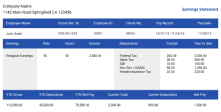
The fix is to pay yourself a consistent draw from your commissions and document it. Creating your own pay stub for each pay period gives you a clean, professional income record that's easy to hand over when someone asks. Need pay documentation for a loan or a lease? You can create your own pay stub in minutes.
Marketing Your New Real Estate Business
Marketing is where a new real estate business either takes off or stalls. The good news is that the most effective marketing in your first year is also the cheapest: your own network. Tell everyone you know that you're in real estate, and ask for referrals directly.
After that, build a simple online presence. Start with a clean website, an active Google Business Profile, and one or two social platforms. Post local market updates there, and you'll do more than a big ad budget ever could. Consistency beats polish here.
In 2026, AI tools give new agents a real edge without much cost. You can use AI to:
- Write listing descriptions and social captions in seconds.
- Qualify and follow up with leads automatically.
- Create virtual tours and staged photos for listings.
Pick one or two channels and show up consistently rather than spreading yourself thin. A new agent who posts helpful local content every week will out-market a part-timer who runs random ads. Your reputation, not your ad spend, brings in repeat clients and referrals.
Common Mistakes to Avoid When Starting Out
A few avoidable mistakes sink more new real estate businesses than bad luck ever does:
- Underestimating the cash-flow gap. That first commission can take months. Keep a reserve so you're not forced to quit early.
- Mixing personal and business money. Open a separate business bank account from day one. It protects your LLC and makes gathering the pay stubs a landlord asks for simple.
- Skipping the legal setup. Forming an LLC and getting proper insurance protects your personal independence and assets.
- Trying to do everything alone. Lean on your brokerage, a mentor, and tools instead of burning out solo.
You Might Also Like
- How to Access Your DoorDash Pay Stub
- How to Calculate W-2 Wages From a Paystub
- How to Access Your Instacart Pay Stub
- Under the Table Jobs Near Me: What to Know
- Weekly Paycheck Calculator
Conclusion
Now you know how to start real estate business from the ground up. Pick a model that fits your budget, follow the seven steps in order, keep your startup lean, and plan for a slow first year. The people who make it aren't the ones with the most money. They're the ones who stay organized, keep a cash reserve, and treat it like the real business it is.
One last tip: keep your income paperwork clean from day one. When a lender or landlord asks for proof of income, you'll be glad you did. Need a pay stub for a loan, lease, or mortgage application? Use our paystub generator to create accurate pay stubs in minutes.