Our customer support is available 24/7:


How Often Can You Refinance Student Loans? (2026 Guide)

Your student loan payment hasn't budged in two years, and you've already refinanced once. So how often can you refinance student loans, really? Good news: there's no legal cap, and no federal rule that says you've used your one shot. What actually matters is whether each refinance saves you money.
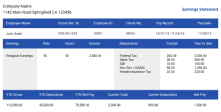
Our paystub creator keeps your income docs lender-ready if your employer doesn't supply them. In this guide, you'll learn the real lender rules, how often most borrowers refinance, what each refi costs your credit, and exactly when it makes sense to do it again. We'll also cover the documents you'll need and a few traps to avoid before applying.
Key Takeaways
- There's no legal limit on how often can you refinance student loans. Lenders set their own rules, and most require 12 months between refis.
- Each refinance triggers a hard credit pull worth 5 to 10 points, but it usually recovers within 3 to 6 months.
- Most experts say wait until you can drop your rate by at least 0.5 to 1 percent before refinancing again.
- Refinancing federal loans into private permanently kills forgiveness, income-driven repayment, and forbearance options.
- You'll need recent pay stubs, a W-2 or 1099, and tax returns for every application.
How Often Can You Refinance Student Loans?
There's no legal limit on how often you can refinance student loans. You can do it as many times as you want, as long as lenders approve you. Most lenders require 12 months between refis. Borrowers consider refinancing their loans often when rates drop, typically one to three times over the life of the loan to lock in better rates.
The federal government doesn't cap refinances either, since refinancing always happens through a private lender. What you'll run into are lender-specific rules. Some require 12 months of on-time payments before reapplying with them. Others limit you to two refinances total on the same loan.
In practice, the math is what stops most borrowers. After two or three refis, small rate improvements get eaten by the credit hit and paperwork. So while there's no rule against refinancing student loans multiple times, the smart question isn't "can I?" but "should I right now?"
Pros and Benefits of Refinancing Student Loans Multiple Times

A big part of figuring out how often can you refinance student loans is understanding the upside. Refinancing more than once can genuinely save you money when conditions line up. Here's what you stand to gain:
- Lower interest rate. If market rates dropped, locking in a new lower rate cuts your monthly payment and total interest paid.
- Adjusted loan terms. Shorten your term to be debt-free faster, or extend it to free up monthly cash flow.
- Better lender experience. If your current servicer has been a headache, refinancing lets you switch.
- Cosigner release. A second refi is often how you remove a cosigner once your credit can carry the loan alone.
Here's a concrete example. Say you have a $35,000 private student loan at 6.5 percent over 10 years. Refinancing student loans multiple times to land at 4.5 percent saves you roughly $4,700 in total interest, around $40 a month. As of 2026, typical fixed APR ranges for qualified borrowers fall between 3.99 and 9.99 percent at the lower end of the market, 4.29 to 8.44 percent at mid-range options, and 4.30 to 9.99 percent at others. If your current rate sits above the low end of these ranges, another refi is worth a serious look.
Cons and Risks of Refinancing Student Loans Multiple Times
The other side of how often can you refinance student loans is the cost. Refinancing too often comes with real downsides. Knowing these helps you decide if your next refi pays off:
- Repeated hard inquiries. Stacking refis within 12 months compounds the credit score damage.
- Possible origination or application fees. Most major refinance lenders don't charge them, but some do. Read the fine print.
- Resetting your loan terms. Each refi resets your clock. Keep extending and you'll pay more total interest even at a lower rate.
- Lost federal protections. Once you refinance federal loans into private, that protection is gone for good.
- Document fatigue. You redo income documentation, employment verification, and credit checks every single time.
There's also a trap most borrowers don't see coming. Every refinance resets the "average age of credit" calculation in your credit score. Refinancing student loans with the same lender every 6 months might feel like you're optimizing, but you're actually chipping away at one of the five factors that build your score. Most experts recommend at least a 12-month gap between refinances for this reason alone.
How Often Can You Refinance Student Loans Without Hurting Your Credit?

Every refinance application triggers a hard credit inquiry. A single hard inquiry typically knocks 5 to 10 points off your score, and the dip usually recovers within 3 to 6 months of on-time payments. If you apply with multiple lenders within a 14 to 45-day window, the credit bureaus treat them as one inquiry. That's the rate shopping window, and it's how you compare offers without getting penalized for each one.
The bigger issue is timing across refis. Refinancing every 6 months means your score never gets full recovery time between applications. According to Experian data, scores typically take at least 12 months to fully rebound from compound credit activity.
Before your next refinance, give your credit a little prep work:
- Keep your credit card utilization below 30 percent for at least 60 consecutive days.
- Set every recurring bill to autopay so your payment history stays spotless.
- Don't open any new credit cards or store credit lines for 6 months before applying.
These three habits can lift your score by 20 to 50 points, which often qualifies you for better tier pricing on your next refi.
Federal vs Private Student Loans Trade-offs
A quick 2026 update first. The SAVE repayment plan was ended by federal court ruling, and roughly 7 million borrowers are being moved to other repayment programs. That shift has pushed some federal borrowers to consider refinancing for the first time. Before you do, understand what you're giving up.
When you refinance federal student loans into a private loan, you permanently lose:
- Income-driven repayment plans (IDR) that cap your monthly payment based on income.
- Public Service Loan Forgiveness (PSLF) for qualifying employment.
- Federal deferment and forbearance during job loss, illness, or hardship.
- Loan forgiveness after 20 to 25 years of qualifying payments.
- Federal hardship protections that pause payments during emergencies.
There's no path back. Once federal loans become private, they stay private. Refinancing private student loans again is low-risk because there's nothing federal to lose. Federal-to-private refinancing, though, is a one-way decision you make once, carefully. If you might ever need IDR, forgiveness, or the protections that come with federal student loans, keep your federal loans federal.
How Often Can You Refinance Student Loans Again? Triggers to Watch
Knowing how often can you refinance student loans is one thing. Knowing when is another. The rule most financial planners use is the 1 percent rule: if you can't drop your rate by at least 0.5 to 1 percent, the credit hit and paperwork usually aren't worth it.
Use this list to check if your situation calls for another refi:
- Your credit score improved by 50+ points since your last refinance.
- Market rates dropped 1 percent or more below your current APR.
- Your debt-to-income (DTI) ratio fell below 40 percent. Most lenders offer better pricing as DTI drops.
- Your income jumped significantly. A raise, new job, or steady side income often unlocks better tier rates.
- Federal protections you relied on changed. The 2026 SAVE plan situation is a real-life example.
There are also clear situations where you should NOT refinance again:
- The rate gap is under 0.5 percent. Savings won't beat the credit hit and time invested.
- You're on track for PSLF or another forgiveness program.
- You're planning to apply for a mortgage or auto loan in the next 6 months.
- You're less than 12 months out from your last refinance.
If two or more "yes" triggers apply and none of the "no" triggers do, your next refinance probably makes financial sense. That's a cleaner way to think about how often can you refinance student loans than just counting calendar months.
Is It Bad to Refinance Student Loans Multiple Times?
No, refinancing student loans multiple times isn't bad, but timing matters. Each refi costs you a small credit score dip and paperwork time, so it only pays off when rates drop at least 0.5 to 1 percent or your credit improves significantly. Refinancing too frequently for tiny rate changes usually doesn't save you real money.
The "is it bad?" question is really a cost-benefit question. Two well-timed refinances over 10 years can save you thousands. Five refinances chasing small rate moves can cost you more in opportunity than they save in interest. Make each refinance count by waiting for a real reason, not just a slightly better number.
What to Consider Before Refinancing Again
Before you apply, run through this quick checklist:
- Good credit score of 650 or higher. Most lenders set the floor here. To get the best advertised rate, aim for 700+.
- Steady income for the last 6 to 12 months. You'll need to prove this with pay stubs and tax returns.
- DTI ratio below 50 percent. Below 40 percent unlocks better pricing.
- At least 12 months since your last refinance. Credit recovery time matters.
- Real rate improvement available. Make sure the new rate beats your current one by 0.5 to 1 percent minimum.
- No need for federal benefits like income-driven repayment and loan forgiveness. If refinancing federal loans, you've already decided you won't need IDR or forgiveness.
If you can't check most of these boxes yet, that's not a no, it's a "not yet." Use the next 6 months to improve your credit and stabilize your income, then apply when the math works. If you're self-employed or doing independent contractor work and need cleaner income documentation, our pay stub templates make it easy to produce lender-ready proof of income.
How to Refinance Student Loans Step-by-Step
Here's the brief version of the process:
- Gather your documents.Pay stubs from the last 30 to 60 days, your most recent W-2 or 1099, last year's tax return, photo ID, and current loan statements.
- Prequalify with 3 or more lenders. This uses a soft credit pull, so it doesn't affect your score. Compare rates, loan terms, and any fees.
- Submit hard applications to your top 2 or 3. Do this within a 14 to 45-day window so the credit bureaus count them as one inquiry.
- Pick your best offer. Compare the total cost over the full loan term, not just the monthly payment.
- Sign and let the new lender pay off your old loan. Keep paying your old loan until you get confirmation it's closed.
If you're a freelancer, contractor, or your employer doesn't provide regular pay stubs, you'll still need income documentation for every application.
You Might Also Like
- How Many Pay Stubs You Need for an Apartment
- How to Get Pay Stubs From an Old Job After Leaving
- Pay Stubs for Rental Applications
- How to Show Proof of Income
- How to Get Pay Stubs From Direct Deposit
Conclusion
So how often can you refinance student loans? As often as a lender will approve you, with no legal cap to worry about. The smarter question to ask yourself is whether each refi actually pays off. Use the 1 percent rule, give your credit at least 12 months between applications, and protect federal benefits you might still need. Each refinance should make your loan cheaper, not just newer.
Need pay stubs for your refinance application? Create accurate, lender-ready pay stubs in under two minutes with our paystub generator.