Our customer support is available 24/7:

How Do Banks Verify Income For Auto Loan Approval?

Knowing how banks verify income for auto loan applications is key to a smooth approval. Most lenders won't take your word alone. They check with your employer, tax offices, and data providers.
Having accurate pay stubs ready before applying can help you avoid delays and rejected applications.
This 2026 guide covers the methods lenders use. It also lists the proof of income documents you'll need and how to speed up the process.
Key Takeaways
- Banks verify income through pay stubs, W-2s, tax returns, and employer contact before approving auto loans
- Your debt-to-income ratio (DTI) should stay below 36% for the best approval odds
- Self-employed borrowers need Schedule C, Form 1040, and two years of tax returns
- Many major lenders now use automated verification systems like The Work Number by Equifax
- Get pre-approved before visiting a dealership to strengthen your negotiating position
- Key Takeaways
- Why Income Verification Matters for Auto Loans
- How Do Banks Verify Income for Auto Loan? Required Documents
- How Do Banks Verify Income for Auto Loan by Employment Type
- Do Lenders Call Your Employer to Verify Income?
- How Do Car Dealerships Verify Pay Stubs?
- Can You Get an Auto Loan With Low Income?
- Tips To Speed up Auto Loan Income Verification
- You Might Also Like
- Conclusion
Why Income Verification Matters for Auto Loans
Banks verify income for auto loans to confirm you can repay. They check three core factors:
- Your credit score
- Down payment
- Debt-to-income ratio (DTI)
Most lenders want a DTI below 36%. That means your total monthly debt should stay under 36% of your monthly income. Some lenders also use a payment-to-income ratio. This compares your new car payment to your gross monthly income.
Let's assume you earn $4,000 a month. A 36% DTI cap means all your monthly debt should stay under $1,440. That includes rent, current loans, credit card balances, and the new car payment. Add up your monthly expenses to see how much car you can afford.
A strong credit score (670+) can offset a low income. A large down payment protects the lender. One strong factor can balance a weaker one.
How Do Banks Verify Income for Auto Loan? Required Documents
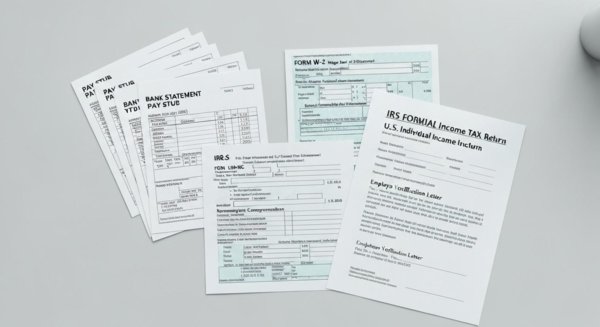
Lenders typically accept these documents to verify income for auto loan applications:
- Pay stubs: 1 to 3 recent stubs showing gross pay, deductions, and YTD totals
- W-2 forms: This confirms annual employment income
- 1099 forms: For independent contractors and freelancers
- Tax returns: Most recent 1 to 2 years, especially for self-employed applicants
- Bank statements: 3 to 6 months of deposits showing income patterns
- Employer verification letter: Confirms job title, dates, and salary
Accuracy matters here. Lenders cross-check your pay stubs against employer calls and IRS income records. If your stub shows $4,200 per month but the employer reports less, approval stalls. Complete pay documents with correct YTD totals can prevent these issues.
How Do Banks Verify Income for Auto Loan by Employment Type
How do banks verify income for auto loan applications when income sources vary? The process differs based on your employment type. The underwriting basis will focus on the last two years of income.
W-2 Employees
Most lenders want 1 to 3 recent pay stubs. Some call your workplace to confirm the details are accurate. A gap between jobs won't stop you from getting approved. The lender just needs to see that your income hasn't dropped sharply between employers. Just started a new job? An offer letter with your first pay stub will do.
Self-Employed Borrowers
Self-employed applicants face a deeper review. You'll need two years of federal tax returns. That includes Form 1040, Schedule C, and Schedule SE. Many lenders also want a YTD profit-and-loss statement and 3 to 6 months of bank statements. You'll also need your employer identification number (EIN) or business license.
Lenders usually average your income over two years. If year 2 was lower, that lower figure may be the one they use. Get pre-approval before going to the dealership. Independent contractors may also like to obtain an independent contractor pay stub to support their application.
Unemployed or Alternative Income
Borrowers without a regular job can still qualify. You'll need to show income from Social Security, unemployment benefits, pensions (1099-R), or recent tax returns. If that's not enough, a co-signer with strong credit and steady income can boost your approval chances.
Do Lenders Call Your Employer to Verify Income?
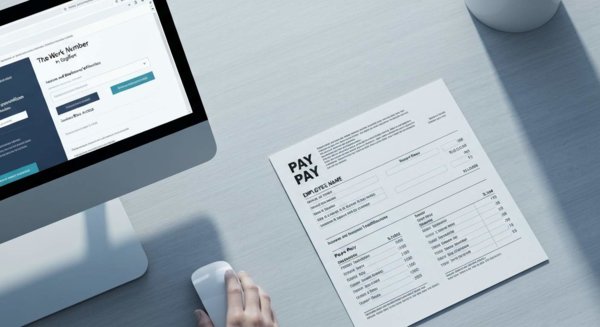
A lender may contact your HR department to confirm your job title, start date, and income. More often than not, your information will be found through "The Work Number" by Equifax. This system connects directly to employer payroll systems and covers over 40% of U.S. employers. It pulls your income data on its own, without a phone call. Some employers also use E-Verify, which confirms work eligibility and identity for lenders.
If your employer uses this system, approval can happen in hours, not days. This is one of the fastest ways banks verify income for auto loan processing. Smaller companies may still get a phone call. Let your HR team know in advance so they're ready.
If your employer doesn't provide detailed pay records, you can verify the authenticity of your pay stub. Then create formal documents to present to lenders.
How Do Car Dealerships Verify Pay Stubs?
Car dealerships don't verify pay stubs on their own. Understanding "How do banks verify income for auto loan applications?" matters here. When you apply at the dealership, they submit your documents to the lender. The check is done by a financial institution. This may be a bank, credit union, or captive lender like Toyota Financial. The lender does the actual income check, not the dealer.
Do car dealerships verify pay stubs themselves? No. They pass your info along to the lender. Be prepared to provide all of your pay documents. It will save a lot of back-and-forth.
Can You Get an Auto Loan With Low Income?
Yes, you can qualify for an auto loan with a lower income by following the steps below.
- Make a larger down payment to reduce the loan amount
- Apply with a co-signer who has strong credit and a steady income
- Finance through a credit union, which often offers more flexible DTI thresholds
- Improve your credit score before applying
No-income-verification loans are available but carry rates above 10% and require larger down payments. Knowing "How do banks verify income for auto loan applications?" can help you build a stronger case. Full verification with proper documents almost always gets you better terms. Locating your employee ID on your paystub can also help speed up employment verification.
Tips To Speed up Auto Loan Income Verification
Check your DTI first. Calculate your debt-to-income ratio before applying. Multiple inquiries within 14 days count as one hard pull under FICO, so you can shop rates without damaging your credit score.
Get pre-approved. Getting pre-approved by a bank or credit union is a smart move. You'll know your budget and can negotiate with confidence.
Organize documents early. Have pay stubs, tax returns, and bank statements ready before your first lender contact. If you've left a previous job, learn how to get pay stubs from an old job.
Apply during business hours. Banks can verify jobs fast when HR is available.
Consider a 20% down payment. Some lenders skip income verification entirely with a sizable down payment.
You Might Also Like
- What Does a 1099 Pay Stub Look Like?
- How to Calculate W-2 Wages from a Paystub
- If Your Employer Doesn't Provide Pay Stubs
- Is a Pay Stub Proof of Residency?
- Are Employers Required to Provide Pay Stubs in Texas?
Conclusion
Now you know how banks verify income for auto loan approval. Getting ready is simple. Gather your pay stubs, tax returns, and bank statements. Know your DTI and credit score. Get pre-approved before heading to the dealer.
Need compliant pay records? Create accurate pay stubs in under two minutes at PayStubCreator.net.