Our customer support is available 24/7:


How To Calculate Monthly Income (2026 Guide)

Knowing how to calculate monthly income is essential for payroll processing, loan applications, and financial compliance. A reliable paystub generator makes documenting these figures straightforward.
The formula depends on your pay schedule. This can be an annual salary, an hourly rate, a weekly paycheck, or biweekly compensation.
This guide shows "How to calculate my monthly income from any pay structure?" You'll find clear formulas, worked examples, and practical tips for business owners and HR professionals.
Key Takeaways
Salaried employees can divide their annual salary by 12 to get gross monthly income
Hourly workers can multiply their hourly rate by the weekly hours, then by 52, and divide by 12
Biweekly paychecks involve multiplying by 26 and dividing by 12 (not by 2)
Find your gross pay on your pay stub under "Gross Pay" or "Gross Earnings."
Gross income is before deductions, while net income is your take-home pay
- Key Takeaways
- What Is Gross Monthly Income?
- How To Calculate Gross Monthly Income From an Annual Salary
- How To Calculate Monthly Income From Hourly Wages
- How To Calculate Monthly Income From a Weekly or Biweekly Paycheck
- Gross vs. Net Monthly Income
- Where To Find Your Gross Monthly Income
- Why Calculating Monthly Income Matters for Your Business
- You Might Also Like
- Conclusion
What Is Gross Monthly Income?
Gross monthly income is the total amount you earn in a single month before taxes, Social Security, health insurance, or retirement contributions are deducted. It includes wages, salaries, bonuses, commissions, and freelance earnings.
Your employee ID on your paystub helps verify which gross figure belongs to your account. Lenders, landlords, and employers use this figure for financial assessments and compliance reporting.
What is my monthly income in practical terms? Your total monthly income includes every compensation source. This includes:
- base salary
- overtime
- tips
- rental income
- investment returns
For business owners managing payroll, tracking gross monthly income per employee ensures accurate tax withholding and compliant pay documentation. Professional pay stubs display gross and net figures clearly for compliance purposes.
How To Calculate Gross Monthly Income From an Annual Salary

The simplest method to calculate gross monthly income is to divide your annual salary by 12.
Formula:
Annual Salary / 12 = Gross Monthly Income
Example: A marketing manager earning $65,000 per year.
$65,000 / 12 = $5,417 gross monthly income.
When calculating monthly income for salaried employees, include all compensation components. Annual bonuses, commissions, and recurring allowances should be factored into the yearly total before dividing.
Knowing how to calculate monthly gross income comprehensively means adding supplemental sources, such as consulting fees or dividends, to the base salary before dividing.
How To Calculate Monthly Income From Hourly Wages
Hourly employees need a different formula. You can also use a weekly paycheck calculator for quick results. To calculate monthly gross income from an hourly wage, multiply the rate by weekly hours, then by 52 weeks, and divide by 12 months.
Formula:
(Hourly Rate x Hours Per Week x 52) / 12
Example: $22/hour at 40 hours/week
$22 x 40 x 52) / 12 = $3,813/month.
Need to know how to calculate weekly pay first? Multiply your hourly rate by weekly hours ($22 x 40 = $880/week). Learning how to calculate weekly income for variable schedules means averaging your hours across the last 12 weeks.
This approach helps you figure out how to calculate monthly income accurately despite overtime and seasonal fluctuations.
How To Calculate Monthly Income From a Weekly or Biweekly Paycheck

The weekly-to-monthly conversion is simple:
Multiply your weekly gross by 52 and divide by 12.
The quick multiplier: 4.333.
Weekly formula:
Weekly Gross x 4.333 = Monthly Income
Understanding how to calculate monthly income from weekly paycheck amounts is straightforward.
If you earn $900/week gross:
$900 x 4.333 = $3,900/month.
This is also how to calculate gross monthly income from weekly paycheck amounts when your employer pays on a 7-day cycle.
Wondering how to convert biweekly to monthly income? Multiply the biweekly gross by 26 and divide by 12.
The quick multiplier: 2.167.
Biweekly formula:
Biweekly Gross x 2.167 = Monthly Income
This is exactly how to calculate monthly income from biweekly paycheck amounts.
A $2,500 biweekly check:
$2,500 x 2.167 = $5,417/month.
Biweekly employees receive 26 paychecks per year, so two months include three paychecks. Using 2.167 instead of 2 prevents underestimating income. To convert weekly pay to monthly or biweekly pay to monthly, always use the annual conversion method for accuracy.
Gross vs. Net Monthly Income
Gross monthly income is your total earnings before any deductions. Net monthly income is your take-home pay after federal and state taxes, Social Security, Medicare, and benefits are subtracted. For example, $5,000 gross typically becomes approximately $3,700 net, depending on your tax bracket and withholdings.
Lenders use gross income for debt-to-income ratio calculations because it provides a standardized figure unaffected by individual tax elections. For budgeting and cash flow planning, net income gives a more practical picture.
Where To Find Your Gross Monthly Income
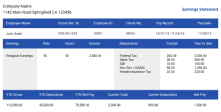
The fastest way to find monthly income is to check your most recent pay stub. Knowing how to find monthly income from documentation is a critical skill for any business professional. Look for "Gross Pay" or "Gross Earnings," which shows total compensation before payroll deductions. Use the current pay period amount, not year-to-date (YTD). Confusing current gross with YTD gross is a common error.
Other sources include:
- W-2 Box 1 (annual wages)
- Employment contracts
- 1099-NEC for contractors
Knowing how to find gross monthly income from these documents saves time during tax season. Understanding how to find monthly gross income on your employer's payroll portal or HR system saves additional time.
Why Calculating Monthly Income Matters for Your Business
Accurate monthly income calculations support loan applications, debt-to-income ratio assessments, payroll compliance, and employee documentation. Learning how to figure out gross monthly income correctly also ensures accurate tax withholding. Miscalculations lead to under-withholding penalties or employee dissatisfaction.
For business owners wondering, "What's my gross monthly income obligation for reporting?", the answer depends on entity type and state requirements. Precise calculations streamline budgeting, tax planning, and compliant pay stub generation.
You Might Also Like
Conclusion
The right formula depends on your pay schedule. For salaried employees, divide the annual salary by 12 to get the monthly amount. For hourly workers, multiply the hourly rate by the weekly hours, then by 52, and divide by 12. Apply the 2.167 multiplier for biweekly paychecks.
Create accurate pay stubs in under 2 minutes with our pay stub generator.