Our customer support is available 24/7:


What Is Oasdi Tax On Paycheck? Oasdi Meaning, Limits, And Benefits

The OASDI meaning is simply an acronym for Old Age, Survivors, and Disability Insurance. It is a Social Security tax withheld from your earnings. You may be looking at your pay stub and wondering, "What is OASDI deduction on my paycheck? " It provides financial support for retirees, disabled workers, and families of deceased workers.
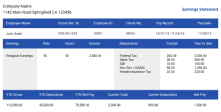
You may need to view your OASDI deductions quickly and need a quick alternative. You can use a pay stub maker to easily create your pay stubs.
We'll discuss OASDI meaning on your paycheck stub and how it works. You'll also learn its benefits, who pays for it, and whether it differs from federal taxes. This way, you'll know what impact these taxes have on your earnings.
- Understanding OASDI Meaning and Why It Is on Your Pay Stub
- How OASDI Tax Works on Your Paycheck
- Who Pays OASDI Federal Tax and Who Gets the Benefits
- OASDI Limits and Tax Rates for 2026
- OASDI Tax vs Social Security Tax and Other Payroll Taxes
- Is OASDI Tax Mandatory? And Are There Exemptions?
- Employer Responsibilities for OASDI Taxes
- Wrap Up
Understanding OASDI Meaning and Why It Is on Your Pay Stub
The OASDI is an acronym for Old Age, Survivors, and Disability Insurance. It is the official federal payroll tax that funds the U.S. Social Security system. When you see OASDI on your check stub, it indicates your employee contribution to the Social Security tax. It is shown on your pay stub or earnings statement. It covers retirement income, benefits for survivors, and disability coverage.
This federal insurance program is authorized under the Federal Insurance Contributions Act (FICA). The OASDI tax you pay ensures the Social Security Administration (SSA) has the funds to provide Social Security benefits. They provide this to insured workers and their families.
Now that we understand the OASDI meaning, let's dive into "What is the OASDI deduction on my paycheck?" Your OASDI deduction provides financial support for aged survivors and individuals with disabilities across the country.
Also read:How To Invest In Real Estate: 5 Lucrative Ways To Get Started
How OASDI Tax Works on Your Paycheck
Basically, people pay a part of their earnings during their working lives. This is to help support benefits for today's beneficiaries. Then, others will get the same when it is their turn to retire or when they face disability later in life.
Most of the money collected from the OASDI federal tax is used to finance monthly retirement checks. The Social Security Administration usually manages it. The tax is used to pay Social Security benefits to current retirees, survivors, and people receiving disability benefits.
So, when you reach retirement age or qualify for disability insurance, the future workers will pay OASDI taxes. This will then help to fund your benefits.
OASDI Tax Rates, Wage Base, and Cost of Living Adjustment
Both employers and employees have to share the OASDI taxes equally. Together, the rate is 12.4%, so each of them pays 6.2% on taxable wages.
Let's give an example: If you earn $2,500 in a pay period, you'd calculate your OASDI withholding like this:
$2,500 x 6.2% = $155
You have $155 taken out for Social Security. Your employer would also have to contribute the same amount on their end. It's your annual earnings for OASDI tax, and they shouldn't exceed the taxable maximum income for the year. This income cap means there is a maximum amount of OASDI contributions you can make annually.
The wage base limit is $184,500. The Cost-of-Living Adjustment (COLA) for Social Security benefits is 2.8%. The higher wage base in 2026 means that more earnings are subject to Social Security tax. Meanwhile, COLA increases the actual benefit payments for retirees and other beneficiaries.
OASDI Tax for Self-Employed, Disabled Workers and Nonresidents
Self-employed individuals have a different process. This includes freelancers, independent contractors, and small business owners. Since these self-employed workers don't have employers to split the cost with, they'd have to pay the full OASDI tax rate.
The self-employment tax rate is 15.3%. 12.4% goes toward Social Security (OASDI) and 2.9% toward Medicare. These taxes are paid under the Self-Employment Contributions Act (SECA). It also applies to sole proprietors. For those also earning self-employment income through an S-Corporation or partnership, they're eligible.
For self-employed nonresidents, Social Security rules work a little differently. They normally do not owe self-employment taxes. This is, unless they later become resident aliens.
Also read:10 Reasonably Safe Alternative Investments - What To Know
Who Pays OASDI Federal Tax and Who Gets the Benefits
Most people who earn income in the United States must pay OASDI taxes. This includes:
Employees who receive wages or a salary.
Self-employed individuals
Employers
Your OASDI benefits depend on your lifetime contributions, up to the taxable maximum. These OASDI benefits include:
Retirement Benefits (Old Age)
Includes average indexed monthly earnings payment for when you reach full retirement age.
Disability Benefits
Monthly payments if you become a worker with disability and can no longer work.
Survivors' Benefits
Monthly payments to the family of a deceased worker.
Lump-sum death payment or insurance
Usually given to a contributor's surviving child or spouse.
You may, however, need a certified financial planner. They could help factor these future Social Security benefits into your retirement plan.
Also read:Real Estate Vs Stocks: Which Is The Better Investment For You?
OASDI Limits and Tax Rates for 2026
Below explains how the OASDI tax rate is deducted and what happens if overpaid.
Annual OASDI Wage Base Limit and What Happens When You Reach It
For earnings in 2026, the wage base limit is $184,500. Individuals with wages equal to or larger than this limit will contribute $11,439 to OASDI.
Employers usually send these taxes to the IRS on their assigned schedule. It could be monthly, semiweekly, or quarterly, depending on their payroll size.
Overpaying OASDI Federal Taxes and How Refunds Work
You can claim a refund for excess OASDI tax if too much was withheld. This often happens if you work more than one job. You can also claim if your combined income from all employers exceeds the annual OASDI limit. You can then claim this overpayment as a credit on your annual tax return using IRS Form 1040.
OASDI Tax vs Social Security Tax and Other Payroll Taxes
OASDI tax is not the same as federal tax. OASDI tax is a specific payroll tax. Federal income tax is a separate tax on your annual income. You have to pay this to the general fund of the federal government.
OASDI tax and Medicare tax are both mandatory U.S. federal payroll taxes. The Federal Insurance Contributions Act (FICA) collects these taxes. However, they fund separate programs and have different tax rates.
Another payroll tax is the Federal Withholding Tax. You'll typically see it as FWT on Paystub. This withholding is the amount of federal income tax that is withheld from your paycheck. Other parts of your pay stub may include the GTL (Group Term Life Insurance) Payroll codes, FTD vs YTD. FTD refers to Federal Tax Deposit, used by employers. YTD means Year-to-Date. It refers to the income from the start of the calendar year through the pay date.
All of these codes can help you understand your finances better. They also help you track your earnings and taxes over time.
Is OASDI Tax Mandatory? And Are There Exemptions?
For many workers, the OASDI tax is mandatory. It is automatically required for eligible earnings. However, there are a few situations in which someone may not be paying Social Security taxes.
Exceptions to OASDI Tax
As we mentioned, if your income exceeds the annual wage base, you're exempt. Some workers in state or local governments may also be excluded. This is especially true if they only participate in a public pension plan instead of Social Security.
Certain nonresident and nonimmigrant visa holders can qualify and claim exemptions from taxes, too. They include foreign students, teachers, researchers, or employees of foreign governments. Whether an individual must pay OASDI federal tax often depends on the type of visa they hold. It also depends on how long they've been in the United States. For example, J-1 and Q-1, and O-1 and TN visa holders.
There may also be an exemption for members of certain religious groups. However, individuals in these communities must file Form 4029 and get IRS approval. Doing this means they'd have to give up their right to any Social Security and Medicare benefits in the future.
Employer Responsibilities for OASDI Taxes


Employers must report OASDI taxes they withhold from their employees' wages. This includes their own matching contributions. They typically do this by:
Filing Form 941 quarterly with the IRS.
Issuing Form W-2 annually to each employee, which shows the total annual OASDI tax withheld.
Penalties if Employers Do Not Pay OASDI Taxes Correctly
Employers usually send these taxes to the IRS on their assigned schedule. It could be monthly, semiweekly, or quarterly, depending on their payroll size. The penalty is that employers would have to pay a percentage of the taxes they did not deposit on time.
Wrap Up
So, what is the OASDI deduction on my paycheck? Understanding the OASDI tax is important. You should know why these taxes are noted on your paystub. Look into the role OASDI taxes play in protecting your income. You may not agree with the idea of these taxes reducing your pay. However, the money is then used to support vital insurance programs. These programs can aid you or your loved ones in retirement, upon disability, or when similar issues arise.
Easily manage your payroll deductions with PaystubCreator. Our platform can help you generate pay stubs with just simple processes. This ensures clarity on taxes like OASDI. Check it out and take control of your earnings today!