Our customer support is available 24/7:


What Is Sui Tax? Employer Guide To State Unemployment Insurance (2026)

Managing payroll means understanding "What is SUI tax?" and how employer contributions to state unemployment programs affect your bottom line.
State unemployment insurance tax is an employer obligation in every state. Rates, rules, and filing requirements vary by location.
This guide covers the SUI tax meaning, who pays it, and how rates are calculated. It also explains how SUI appears on the pay stubs you generate for employees.
Key Takeaways
SUI (state unemployment insurance) tax is primarily an employer-paid payroll tax that funds unemployment benefits for workers separated through no fault of their own.
Only Alaska, New Jersey, and Pennsylvania require employee SUI contributions.
SUI rates range from 0% to more than 10% based on your state, taxable wage base, and claims history.
SUI and SUTA represent the same obligation, while FUTA is a separate federal unemployment tax.
What Is SUI Tax?
SUI tax (state unemployment insurance tax) is a payroll tax that employers pay. The program provides wage replacement to workers who lose their jobs through no fault of their own. Also called SUTA tax, SUI rates vary by state. Your rate depends on your taxable wage base and claims history.
What does SUI stand for? State unemployment insurance. SUTA (State Unemployment Tax Act) refers to the law that mandates the tax. UI is the broader umbrella term. The SUI abbreviation meaning is straightforward. It identifies how states fund their unemployment insurance programs.
Is SUI the same as SUTA? Yes. SUI describes the program, while SUTA refers to the act that funds it.
Who Pays SUI Tax?

Employers pay SUI tax in almost every state. Keep in mind that independent contractors are not covered employees, so SUI does not apply to them. The three exceptions are Alaska, New Jersey, and Pennsylvania. In those states, employees also pay a share of their wages. 501(c)(3) organizations with tax-exempt status may qualify for exemption. Your rate depends on state rules and your experience rating.
New Jersey SUI Details
The NJ SUI tax meaning goes beyond a single deduction. New Jersey requires employees to pay into three funds:
- UI (Unemployment Insurance)
- WDP (Workforce Development Partnership)
- SWF (Supplemental Workforce Fund)
Each shows up as its own line item on NJ pay stubs.
Pennsylvania SUI for Employees
PA SUI requires employees to pay into the state's unemployment trust. The PA SUI tax meaning refers to this employee-paid portion. Understanding "What is SUI employee-paid PA requirements?" can help you stay compliant with state payroll rules.
Is SUI Tax a Payroll Tax?
Yes, SUI is a payroll tax. Employers pay it along with federal payroll taxes like FUTA. In most states, SUI doesn't come out of employee wages. The employer covers this cost entirely. SUI is separate from SDI (State Disability Insurance) and TDI programs. When employers ask, "What is SUI in payroll?", the answer is straightforward. It's the state-mandated unemployment insurance part of your payroll tax bill. You'll pay it on wages up to the state's taxable wage base.
What Is SUI Tax on Your Paycheck?

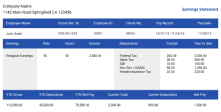
Most employees won't see the SUI tax on their paycheck. Employers pay it directly. But in Alaska, New Jersey, or Pennsylvania, you'll see a SUI payroll deduction on your pay stub.
When employees ask, "What is SUI on my paycheck?", the answer is straightforward. It's their share of the state unemployment insurance fund. If you generate pay stubs for exception-state employees, make sure this line item is correct. Need compliant pay documentation? Generate professional pay stubs in under two minutes.
The SUI on paystub line appears under state tax deductions. For a full breakdown of common abbreviations, see our guide to pay stub abbreviations. Employees asking, "What is SUI tax on my paycheck?" can check their state's Department of Labor website for current rates.
SUI Tax vs. FUTA: Federal vs. State Unemployment Tax
FUTA (Federal Unemployment Tax Act) requires employers to pay 6% on the first $7,000 of each employee's wages. If you pay SUI on time, you get a credit of up to 5.4%. That brings the effective FUTA rate down to just 0.6%.
Is SUI the same as UI? UI is the umbrella term. SUI refers only to the state-funded part.
Ensure you file IRS Form 940 by January 31 each year to report FUTA. If your bill tops $500, you'll need to make quarterly deposits through the Electronic Federal Tax Payment System.
SUI Tax Rates by State in 2026
Now that you understand "What is SUI tax?", the next step is knowing your rate. The tax rate range spans from 0% to more than 11%. Your rate depends on your experience rating and the state's taxable wage base. In 2026, many states have adjusted rates as trust funds recover from pandemic-era losses.
New employers typically start at 2-4%. Your employer tax rate is set annually. Your state's Department of Labor sends annual rate notices. Compare each notice to the prior year. If your rate went up, check whether former employees filed claims you can contest.
How To Calculate Your SUI Tax Rate
Your SUI tax rate is determined by two factors:
- Your state's taxable wage base
- Your experience rating
New employers start with a standard new employer rate of 2-4%. Over time, the rate shifts. Fewer unemployment claims mean a lower rate.
To lower your rate, focus on three strategies:
- Reduce employee turnover
- Contest invalid claims
- Maintain complete separation records
You can also learn more about understanding pay stub deductions to verify your payroll tax calculations.
How To Pay SUI Tax
Employers make quarterly payments to their state unemployment agency. Register for a tax account, get an employer number, and submit payments on schedule. For FUTA, file Form 940 by January 31. Make quarterly deposits if your bill tops $500.
Tools like ADP and QuickBooks Payroll handle SUI calculations across states. This matters most when your team works in more than one state.
Is SUI Tax Deductible?
Yes. Both SUI and FUTA taxes are tax-deductible as business expenses on your federal income tax returns. Sole proprietors claim this on Schedule C, line 23. SUI payments also factor into your W-2 calculations. See our guide on how to calculate W-2 wages from a pay stub.
You Might Also Like
- OASDI Tax Meaning: What It Is and How It Affects Your Pay
- FWT Meaning: Federal Withholding Tax on Your Pay Stub
- How Much Do Minors Get Taxes Taken Out of Their Paycheck?
- What Are Payroll Warrants and How Do They Work?
- Weekly Paycheck Calculator: Estimate Your Take-Home Pay
- What Is LTD on Paystub? Employer Guide (2026)
- Is PTO Taxed? 2026 Employer Guide to Rates and Calculations
- Net vs Gross Income: What Employers Need to Know (2026)
- What Is a Check Number on a Pay Stub?
In Conclusion
Understanding "What is SUI tax?" can help you stay on top of payroll compliance. SUI is a state-level employer obligation that varies by location and claims history. Keep your rates current and file on time to avoid penalties.
Streamline your payroll documentation. Generate professional pay stubs at PayStubCreator.net.