Our customer support is available 24/7:


Tenant Not Paying Rent And Won't Leave? Your 2026 Guide

A tenant not paying rent and won't leave is one of the worst problems a landlord can face. Bills are tied to that rent. Now someone lives in your rental property for free and ignores your calls.
The good news: you have clear legal options. This 2026 guide covers what to do when a tenant not paying rent and won't leave. You'll learn how to review your lease, serve the right notice, and file in housing court. You'll also learn how to recover unpaid rent and stop this from happening again.
Key Takeaways
- Review your lease and your state's landlord-tenant laws before you act
- Serve the correct eviction notice for nonpayment of rent; most states use a pay-or-quit notice or a notice to quit
- Know your landlord rights and your tenant's rights before any step
- Never change locks or shut off utilities; that is illegal self-help eviction in every state
- File an unlawful detainer in housing court if the tenant doesn't leave after notice
- Screen new tenants with verified proof of income, and ask for a co-signer when needed
What To Do When a Tenant Not Paying Rent and Won't Leave
Your first move is to pull out the lease agreement. Re-read the rent, grace period, and late fee clauses. Every lease should spell out when rent is due. It should also cover the grace period and what happens if rent isn't paid.
State landlord-tenant laws also override your lease. A lease cannot waive a tenant's right to proper notice or skip the court process. Know both landlord rights and tenant rights in your state. Check your state's housing site for the rules. A property management firm, if you use one, can also help you follow the steps.
Quick 2026 note: The federal COVID-era eviction moratorium is gone. Most state emergency protections have ended too. Standard eviction rules now apply in almost every state. Cities like NYC, LA, and San Francisco still have added tenant rights on top.
Watch out for the partial rent trap. If you accept a partial rent payment during an eviction, many states treat it as a reset. Your pay-or-quit notice can become void. Get legal advice before accepting anything less than the full amount owed.
Confirm Non-Payment and Contact the Tenant First

Before sending a notice, confirm the rent really didn't come through. Check your rent collection tool, your bank, or your ACH transfer log. Typical grace periods run 3 to 5 days past the due date. A payment that's one day late isn't grounds for action yet.
Then reach out. A text, email, or phone call asking what's going on solves a lot of problems. If the tenant wants to talk, you can often work out a short-term payment plan or mediation. Document every contact attempt with dates, times, and content.
Types of Eviction Notices You Can Serve
Once grace periods are past and talking isn't working, serve a formal notice to quit. The type depends on the situation.
- Pay-or-Quit notice: The most common for nonpayment of rent. The tenant has a short window to pay or move out.
- Cure-or-Quit notice: Used when the tenant has broken a lease term other than nonpayment of rent.
- Unconditional Quit notice: Used in severe cases. No chance to cure; just a move-out deadline.
State notice periods vary:
| State | Notice Period |
|---|---|
| California | 3 days |
| Texas | 3 days |
| Florida | 3 days |
| Illinois | 5 days |
| Georgia | 7 days |
| Pennsylvania | 10 days |
| New York | 14 days |
For example, Illinois and Missouri use a five-day notice. Always check your local county rules too, since some cities have longer periods.
Avoid Self-Help Eviction Tactics

It's tempting to just change the locks, but don't. Self-help eviction, meaning any physical action to force the tenant out without going through the courts, is illegal in every U.S. state. That includes:
- Changing locks
- Shutting off electricity, water, or heat
- Removing the tenant's belongings
- Threatening or intimidating the tenant
The risk is real. In California, a landlord can be sued for damages plus $100 per day. In Texas, the penalty is $1,000 per violation, plus the tenant's attorney fees. Most states let tenants sue for wrongful eviction. Judgments often run higher than the unpaid rent.
Serve Notice and Document Everything
Once you've prepared the right notice, serve it correctly. Certified mail with return receipt is one of the safest methods. Some states require personal delivery, posting on the door, or a licensed process server.
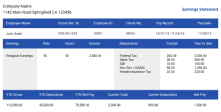
Keep your eviction file organized. If you need to reference pay stubs during the process, know that year-to-date earnings are what most courts will focus on. Here's the documentation checklist every landlord should have ready:
- Signed lease copy
- Payment ledger
- Copies of every late rent notice and eviction notice
- Certified mail receipts
- Screenshots of text messages and email threads
- Move-in inspection photos
- Repair receipts and maintenance records
- Eviction filing paperwork
A well-organized file can be the difference between winning and losing in court.
The Formal Eviction Process Step by Step
A formal eviction is the legal path when you have a tenant not paying rent and won't leave. If the notice period ends and the tenant still won't move, here is the process:
- File an unlawful detainer lawsuit. This is the formal eviction lawsuit. Submit it to your local housing court. Filing fees usually run $50 to $250.
- Tenant gets served. The court sends a summons and complaint. A response window follows (often 5 to 20 days).
- Attend the court hearing. Bring your full documentation file. If the tenant doesn't show, the judge typically grants a default judgment in your favor.
- Get the writ of possession. The court issues a writ (sometimes called an order of possession). This allows physical removal.
- Sheriff executes the eviction. A deputy sheriff handles the actual removal. You can't do this yourself.
Nationwide eviction timeline:
| Stage | Time |
|---|---|
| Notice period | 3–30 days |
| Filing to hearing | 1–4 weeks |
| Court hearing and judgment | Same day |
| Writ issued | 1–7 days |
| Sheriff execution | 1–2 weeks |
| Total (uncontested) | 3 weeks to 2 months |
| Total (contested) | 4–6+ months |
Contested cases in New York or California can run past six months.
Cash for Keys as an Alternative
Sometimes the fastest way out is a cash for keys deal. You pay the tenant a lump sum to move out by a set date. In return, you skip the court process.
Typical offers run $500 to $3,000, based on rent owed and the local market. A full eviction often costs $3,500 to $10,000 in legal fees, lost rent, and property damage. Some landlords use short-term financing to cover the gap. This guide to different loan types breaks down what's typical.
Put everything in writing. A signed move-out deal should list the move-out date and the cash amount. It should also include a clause waiving unpaid rent and confirm the unit will be left clean. Pay only after the keys are returned.
Recover Unpaid Rent After Eviction
Once you've dealt with a tenant not paying rent and won't leave, getting back the rent is the next step. Lost rent hurts cash flow, so act fast. Here's how to recover what you can:
- Apply the security deposit to unpaid rent and damage first.
- File in small claims court for the remaining balance. Most states cap small claims around $5,000 to $10,000.
- If you win, you'll get a money judgment.
- Enforce the judgment through wage garnishment, bank levies, or property liens.
- For older debt, turn it over to a collections agency.
It's not instant, but steady pressure often brings results.
Preventing a Tenant Not Paying Rent and Won't Leave Situation
The best way to avoid this mess is catching high-risk applicants during screening. Here's what strong tenant screening looks like:
- Require 2 to 3 recent pay stubs as proof of income
- Verify employment and pay stubs directly with the employer
- Run a credit and background check
- Ask for references from previous landlords
- Confirm income is at least 3 times the monthly rent
- Ask for a co-signer if the applicant has thin credit or low income
If you're on the renter side of this equation, having clean, verifiable pay stubs for rental applications speeds up approval. No detailed pay records from your employer? You can create your own in under two minutes with our pay stub creator. It's a simple way to hand landlords the proof of income they want.
When to Work With a Real Estate Lawyer
Some situations are too complicated to handle alone. Bring in a real estate lawyer if any of these apply:
- The tenant is contesting the eviction
- Your property is rent-controlled
- There's no written lease
- The tenant has filed a habitability counterclaim
Standard evictions typically run $500 to $2,500 in legal fees. Complex cases cost more, but a good lawyer usually pays for themselves in mistakes avoided. Many states also have free legal aid clinics for landlords and tenants who qualify.
Conclusion
When you have a tenant not paying rent and won't leave, the path is clear. Know the law, serve the correct notice, and go through housing court. Skip the self-help tactics. Good records at every step keep you on solid ground.
On the prevention side, strong screening with verified proof of income stops most of these issues early. If you're a renter gathering documents for your next lease, you can build a pay stub in minutes with our paystub generator. It's a quick, calm way to show your income and get approved.