Our customer support is available 24/7:


Renting Month To Month After Lease Expires: 2026 Guide

Renting month to month after lease expires is one of the top ways renters extend their stay. It works without signing a new one year lease. Your lease is almost up. You're weighing your options: stay put, move out, or shift to a flexible setup. The fixed-term lease vs month-to-month choice is one most renters face at some point. The landlord's market of 2022 to 2024 leaned hard on fixed-term leases. By 2026, more landlords allow renting month-to-month for reliable tenants. This guide walks you through what happens when your lease expires, what you'll pay, and how to get fair terms.
Key Takeaways
- When your lease ends, you usually have three paths: renew, move out, or transition to month to month with your landlord's approval.
- Month to month rent tends to run 10 to 25% higher than the fixed-term rate.
- Most states require 30 days notice in writing to end a month to month agreement.
- Proof of income (usually recent pay stubs) is commonly required when switching to a month to month setup.
- A choice to stay after the lease ends without permission creates a "holdover tenancy" that can lead to eviction.
What Is Renting Month to Month After Lease Expires?
Renting month to month after lease expires means your fixed-term lease has ended. You're now paying rent on a rolling 30-day basis. Instead of signing on for another year, you and your landlord keep the rental going monthly. Most of your original written lease terms stay in place. Either side can end it with proper written notice.
A fixed-term lease locks you in for 6 to 12 months, like a one year lease. A month-to-month rental agreement works differently. It renews every 30 days as long as you keep paying and your landlord keeps accepting rent. Same apartment, same key. What changes is the commitment: you're free to leave sooner, and so is your landlord.
How Your Lease Converts to Month to Month

There are two common ways this happens. First, your original lease may include an automatic renewal clause that kicks in when the fixed term ends. Some leases roll you into month to month automatically; others renew you into another full year unless you give notice. Read your lease carefully, or ask your landlord what happens when lease expires under your specific agreement.
Second, you and your landlord can simply agree (ideally in writing) to switch to a month to month rental agreement when the lease is up. A signed month-to-month rental agreement spells out the new rules. If neither of you says anything, and you keep paying while your landlord keeps accepting rent, most states treat that as a periodic tenancy. In plain English: you're already month to month without signing a thing.
Holdover Tenancy: Your Status After the Lease Expires
A holdover tenancy is what happens when you stay in the unit after your lease ends. Any choice to stay after the lease needs a clear status. Depending on how your landlord responds, you fall into one of three categories of month to month tenancy. A month-to-month lease may still apply. Knowing which one fits your case matters. Your protections as a holdover tenant change a lot between them.
Tenancy at Will
You and your landlord both agree you can stay, but without a set end date. Either party can end the arrangement at any time with proper notice. It's flexible, but offers less protection than a fixed-term lease.
Periodic Tenancy
This is the standard month to month tenancy arrangement. You keep paying rent on the original schedule, your landlord keeps accepting it, and the rental continues in rolling periods (usually monthly). Most of your original lease terms remain in force unless you've agreed to new ones in writing.
Tenancy at Sufferance
You've stayed without your landlord's permission. This is the risky one. Your landlord can begin eviction, and your previous lease rights mostly don't protect you anymore. If you're in this situation, ask for written permission to stay, or start planning your move.
Notice Requirements When Renting Month to Month After Lease Expires

Both landlords and tenants must give 30 days notice in writing before ending a month-to-month tenancy. Rules vary by state. Some require more, and a few require less. In California, the California Civil Code asks for 30 to 60 days based on how long you've lived there. A proper month to month notice to vacate needs to be dated and put in writing (not a text message in most states), with a clear move-out date.
Here's a quick look at common state notice periods for month to month residential rentals:
| State | Notice Period |
|---|---|
| California | 30 to 60 days (depends on tenure) |
| New York | Varies by tenure and city |
| Texas | 30 days |
| Illinois | 30 days |
| Washington | 20 days |
Wondering how to end month to month lease terms cleanly? A short non-renewal letter is all you need. Groups like the American Apartment Owners Association publish state-specific templates that can help. Include your name, the unit address, the date you're writing, and your intended last day. Keep a copy for your records.
Landlord Rights When Your Lease Ends
Your landlord has real options when your lease expires. They can offer a new fixed-term lease, move you onto a month to month arrangement (sometimes at a higher rate), or decline to renew. Landlord-tenant law gives them the right to choose.
What your landlord can't do is force you out without the proper process. They can't lock you out, shut off your utilities, remove your belongings, or skip the written notice required by your state. If your landlord wants you out quickly, they may offer "cash for keys" — a voluntary payment in exchange for a fast move-out. You're not required to accept. If things get stuck, a formal eviction is their only legal path.
Month to Month Lease Pros and Cons
The month to month lease pros and cons come into focus quickly once you break them down. The biggest selling point is flexibility: with 30 days of notice, you can leave whenever it makes sense, whether you're relocating for a job, house-hunting, or riding out a financial shift. No signing away a year of your life.
The trade-off is cost and stability. Landlords typically charge a 10 to 25% month to month rent increase over the fixed-term rate because they take on more turnover risk. Being able to show proof of income quickly helps you lock in fair terms either way. The same flexibility that lets you leave also lets your landlord end the arrangement on similar notice.
A quick way to decide if renting month to month after lease expires makes sense for you:
- Worth it if: you plan to move within six months, you're actively apartment-hunting, or you're expecting a job or life change.
- Probably not worth it if: you expect to stay 12+ months. The monthly premium adds up quickly compared to signing another fixed-term lease.
Lease Renewal vs Month to Month
The lease renewal vs month to month decision comes down to two things: how long you plan to stay, and how much you value flexibility. Here's a side-by-side comparison:
| Feature | Month to Month | Fixed-Term Lease |
|---|---|---|
| Duration | Rolling 30 days | 6 to 12 months (or longer) |
| Flexibility | Leave anytime with notice | Locked in; early-exit fees |
| Rent Stability | Can change with proper notice | Locked for the full term |
| Notice to End | Typically 30 days | End of term (no notice needed) |
| Rent Premium | 10 to 25% higher | Standard rate |
How to Switch to Month to Month After Your Lease
Want to stay on a month to month rental agreement after your lease ends? Don't wait until the last week. Renting month to month after lease expires works best when you start the conversation early. Here's a practical, renter-side process:
- Review your original lease. Look for a clause about what happens at the end of the term. Some leases switch you to month to month automatically; others renew for another 12-month term unless you give notice.
- Request the switch in writing. Reach out at least 45 to 60 days before your lease expires. An email is fine, but save a copy for your records.
- Ask about rent changes. Get the new monthly rate in writing before you agree to anything.
- Get the new terms in a lease addendum. A short signed document covering rent, notice period, and any updated clauses protects both of you.
Before you agree, ask your landlord these three questions:
- What will the new monthly rent amount be?
- How much notice do I need to give before moving out?
- Are there any new clauses being added to the agreement?
Proof of Income When Going Month to Month
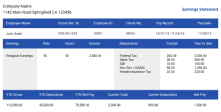
Your landlord may ask for proof of income before agreeing to let you start renting month to month after lease expires. Short-term tenancy is a higher turnover risk for them, so they want to see steady income. Typical ask: 2 to 3 recent pay stubs or bank statements. If you're self-employed, a freelancer, or a gig worker without formal pay stubs, you can create accurate ones from your real earnings using a pay stub generator in a couple of minutes. The same documents also work for rental applications.
Conclusion
When your lease expires, you have more options than it often feels like. You can renew for another year, move out cleanly, or shift to renting month to month after lease expires for full flexibility. The right choice depends on how long you actually want to stay and what your landlord is willing to offer. If your landlord needs proof of income to switch you over, you can generate professional pay stubs from your real earnings in minutes at our paystub generator.