Our customer support is available 24/7:


Vacation Rental Tips For Renters: Book Smart In 2026

Planning a trip should be the fun part. Picking dates, scrolling through listings, daydreaming about that porch view. Then you start booking and suddenly there are cleaning fees, security deposits, and house rules you swore you read. If you've ever felt that mild panic before you click "Reserve," you're in the right place. If a host ever asks for proof of income, our pay stub generator can create one in minutes.
These vacation rental tips are written for you, the renter, not the property owner or the property manager. The US vacation rental market hit $19.3 billion in 2023 and is still growing at about 4.7% a year, which means more choices and more leverage for you as a guest. We'll walk through how to find the right rental, how to spot red flags, budget the real total cost, and what to do when a host asks for proof of income. These vacation rental tips will save you money and stress.
Key Takeaways
- Read the full listing and house rules before booking, not just the nightly rate.
- Add cleaning fees, service fees, taxes, and security deposits to know the real total cost.
- Message your host early and keep all communication on the platform.
- For longer stays, have two to three recent pay stubs ready as proof of income.
- Great vacation rental tips come down to being prepared, honest, and respectful.
What Makes a Great Vacation Rental?
A great vacation rental has an accurate listing, recent photos of every room, 50 or more verified reviews averaging 4.7 stars, and a host who replies within a few hours. Clear house rules, honest amenity descriptions, and a transparent breakdown of cleaning fees round out the best choices.
Beyond the obvious stuff (clean, safe, nice view), what actually separates a great rental from an okay one is honesty. The listing should match the photos, the photos should match the place, and the host should tell you what isn't great along with what is. A small kitchen isn't a dealbreaker if the listing says "compact galley kitchen with two burners." It becomes one when the photos crop out the fact that there's no oven.
Most renters book through Airbnb, VRBO, or Booking.com, and each platform has its own review system, dispute process, and fee structure. Pick the platform you trust most for the trip you're planning. The best vacation rental tips start with choosing the right platform for your situation.
Vacation Rental Tips: How to Find the Right Place

Start with your non-negotiables. Write them down before you open a single listing. Number of bedrooms, pet-friendly or not, parking, walkable location, air conditioning, pool, whatever matters for this trip. When you search, filter hard on those items. It's easier to say no to a beautiful place that misses one of your must-haves than to talk yourself into it and regret it on day two.
Cross-reference listings on multiple platforms. The same property often appears on Airbnb, VRBO, and Booking.com at different prices. Sometimes the host has their own website with direct booking, which can save you 10 to 15% because you skip the platform service fee. Direct-booking sites are worth a quick search if you're trying to stretch your budget, and keeping pay stubs for rental applications handy speeds up any verification the host may ask for.
Look at reviews carefully, not just the star count. Recency matters more than volume. A rental with 200 reviews averaging 4.8 stars but the last review was 14 months ago is a different story than one with 40 reviews from the past six months. Scan the review text for patterns. If three different guests mention the hot water being unreliable, believe them.
High-quality photos of every room are non-negotiable. If the listing shows five photos and they're all of the living room and the view, ask yourself why. A legit host wants to show potential guests exactly what they're getting. Some even link to a social media page with real photos of the rental property. Vague listings that lean on stock images are usually hiding something.
Vacation Rental Tips for Spotting Red Flags Before You Book
Sometimes the best advice is about what to avoid. A few things should make you pause and check again before you book:
- Prices way below market for the area. If every other three-bedroom in the neighborhood goes for $250 a night and this one is $95, that's a signal.
- No reviews, or only a handful of short 5-star reviews. Brand-new listings happen, but be cautious. Ask the host questions before you commit.
- Requests to pay outside the platform. A host asking you to Venmo or wire money directly cuts out the platform's dispute process. That's where scams live.
- Photos that look like stock images. Reverse-image search is your friend. If the same "cozy cabin" shows up on 10 unrelated listings, move on. The same caution applies to income verification from the other side: hosts know how to spot fake pay stubs, so only submit real ones.
- Vague location descriptions. "Near downtown" is not an address. You should be able to tell roughly what neighborhood you're booking.
- Missing or incomplete house rules. Every legit rental has them. If the listing has nothing about check-in time, quiet hours, or guest limits, the host is either disorganized or hiding surprises.
One or two of these isn't always a dealbreaker, but if you see three or more, keep scrolling. There are plenty of good rental properties out there.
Budgeting as a Renter: The Real Total Cost

One of the most essential vacation rental tips: the nightly rate is not the price. Before you book, factor in everything that shows up at checkout. Here's what a typical booking looks like in real numbers.
Imagine a rental at $150 a night for three nights. That's $450 on the sticker. Now add a $100 cleaning fee, which is common for a two-bedroom. Add the platform service fee, usually 13 to 15% of the base, so roughly $75. Then you have local occupancy or hotel tax, which varies by city but is often 10 to 15% (call it $50). Before your security deposit is even factored in, you're looking at about $675 for three nights, not $450.
A security deposit is held separately and refunded after checkout as long as nothing's damaged. Budget for it even though you expect it back. And if you're booking in high season or around an event, dynamic pricing tied to seasonal demand can push nightly rates 30 to 100% higher than off-season. Running the full math (and knowing how to calculate monthly income against trip costs) protects your wallet.
One bright spot for 2026: Airbnb has been rolling out total-price-upfront displays, so you see the full cost earlier in the booking flow. Compare side by side on that basis, not on the deceptively small nightly rate.
Proof of Income for Vacation Rental Applications
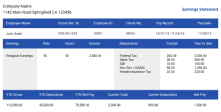
Some vacation rental hosts, especially those renting weekly or monthly stays, ask for proof of income to confirm you can cover the nightly rate and any damages. Two or three recent pay stubs usually satisfy the request. Self-employed or gig workers without employer stubs can generate a professional pay stub at PayStubCreator.net in under two minutes.
This catches a lot of renters by surprise, and it's one of the most practical vacation rental tips you'll find for longer stays. It mostly comes up in three situations: longer stays (weekly or monthly), higher-end properties, and direct-booking with a private host who isn't using Airbnb's built-in verification. A few long-term hosts also run a soft background check. Some use a service like TransUnion. From the host's side, it's reasonable. They're handing over their home for four weeks and want to know you can pay for damages if something happens.
If you're a traditional W-2 employee, this is easy. Ask payroll or log into your company portal, pull two or three recent pay stubs, and send them over. Wondering how many pay stubs for apartment or vacation rental applications? Two recent ones usually clear most hosts. Bank statements work as a backup if pay stubs aren't handy.
If you're self-employed, a freelancer, a contractor, or a gig worker, you probably don't get a neat pay stub each period. There's a whole question of whether an independent contractor pay stub even exists in a formal sense, and most renters in this boat create their own. Pair one with a recent bank statement showing regular deposits and most hosts will be satisfied.
Rental Agreements & House Rules: Read Before You Sign
Rental agreements get skipped more than any other item on this list of vacation rental tips. Most short-term rentals have a short-term rental agreement you'll be asked to accept before or at check-in. It's usually a few pages covering guest count limits, pet policies, quiet hours, damage responsibility, cancellation terms, and who pays for what. Read it.
Common house rules you'll see across most listings include no parties, no smoking, quiet hours (often 10 PM to 8 AM), no unregistered guests, and specific pet policies if the property accepts pets. Some places add specifics like "no shoes inside" or "use the provided linens only." These rules aren't arbitrary. They're usually based on past problems the host has dealt with.
The house manual is different from the rental agreement. It's the practical guide that usually arrives with your check-in instructions: how to work the thermostat, the Wi-Fi password, where to park, trash pickup day, what to do if the power goes out. Save the house manual to your phone the moment it arrives.
When a property management company is involved, rules tend to be stricter and communication tends to be slower because you're talking to a team, not an individual. That's normal. Plan to send questions a day or two earlier than you would with a solo host.
Before you travel, screenshot the rental agreement and the house rules. If any disagreement comes up during your stay, having the written rules on hand saves a lot of back-and-forth.
Check-In, Check-Out & Communication
Most vacation rentals use self-check-in with a door code or lockbox, sent 24 hours before arrival. Clear guest communication through the platform confirms check-in time, answers questions, and documents any issues during your stay. Before leaving, follow the checkout instructions (trash out, dishwasher started) to protect your security deposit and review rating.
Your first message should be short and friendly. Something like "Hi, excited for our stay next week, just confirming check-in at 4 PM?" does the job. If you need early check-in or late checkout, ask early.
Self-check-in is now the default. You'll get a door code or smart-lock instructions 24 hours ahead of time. If you haven't received check-in instructions by arrival day, message the host through the platform right away. Keep all communication on the platform, not over text, because the platform needs a paper trail if anything goes wrong later.
What to Do If Something Goes Wrong During Your Stay
Stuff breaks. A lightbulb goes out, the Wi-Fi drops, the AC struggles in a heatwave. For small issues, message the host first and give them a reasonable window to respond. For anything bigger (leak, lockout, safety concern), document it with photos and timestamps, then contact the host immediately through the platform.
If the host doesn't respond or the issue isn't resolved, escalate to the platform's dispute process. Airbnb has AirCover for guests, and VRBO has Book with Confidence. Both can help with refunds, relocations, or partial reimbursements. Before you leave, do a quick final walkthrough and follow the posted checkout instructions.
Vacation Rental Tips for Cleaning Expectations
The cleaning fee you pay at booking covers professional cleaning between stays. It does not cover you leaving the place a total mess. There's a middle ground most hosts expect.
What's reasonable to do before you leave:
- Take out the trash and recycling
- Run the dishwasher (or at least rinse dishes in the sink)
- Strip the beds if the house rules ask for it
- Leave used towels in the bathroom or laundry basket
- Lock doors and windows
What's not your job: deep cleaning, laundry, mopping, scrubbing the shower. You paid for that.
Skipping the basics can cost you a 5-star rating and, in rare cases, a portion of your security deposit. Ten minutes of tidying on your way out protects both.
Amenities: What to Expect in a Vacation Rental
Standard rental amenities across most listings include Wi-Fi, linens, towels, basic kitchen setup (pans, plates, coffee maker), and basic toiletries. Hair dryers and an iron are common. Beach towels and laundry detergent are sometimes included, sometimes not.
Nice-to-haves in mid-range rentals include a welcome basket, streaming services on the TV, bikes, beach gear, or a grill. Luxury amenities show up in premium properties: hot tubs, private pools, game rooms, and concierge service. If the listing highlights these, make sure the photos show them being available (not a pool that's under seasonal maintenance half the year).
Cross-check what's promised in the listing with what's shown in the photos. Inconsistency between amenity claims and visual evidence is an easy red flag to spot.
Being a Good Guest: Renter Etiquette That Gets 5-Star Reviews
One of the most overlooked vacation rental tips: you get reviewed too. Hosts leave reviews about guests, and those reviews travel with you across platforms. Great guest reviews unlock better properties and sometimes discounts. Poor reviews close doors.
Before You Arrive
Confirm your check-in window. Ask any questions you have (parking, luggage drop-off, pet policy) at least a day or two in advance. Read the house rules and the house manual. If you're arriving late at night, give the host a heads-up.
During Your Stay
Respect quiet hours. Don't exceed the guest count listed in your booking (this is a huge one for hosts). If something breaks by accident, tell the host right away through the platform. Owning up to a broken glass is a small thing; hiding it and hoping they don't notice is how good guests lose their rating.
At Checkout
Follow the posted instructions word for word. Leave the place tidy, lock up, return any keys or parking passes, and don't take anything that wasn't meant to travel. A quick "Thanks for hosting us, we had a great time" message goes a long way and cements all the vacation rental tips you just put into practice.
You Might Also Like
- Pay Stubs for Rental Applications: Another Angle
- How to Access Your DoorDash Pay Stub (Gig Income for Renters)
- What Does a 1099 Pay Stub Look Like?
- How to Get Pay Stubs From an Old Job
- Is a Pay Stub Proof of Residency?
Conclusion
These vacation rental tips come down to four simple ideas: know what you want, read the fine print, budget the real total cost, and be a guest a host would want back. Do those four things and you'll book better, save money, and come home with good memories instead of stories about things that went sideways.
If a host ever asks for proof of income, you now know exactly what to do. W-2 employees can grab two or three recent pay stubs from payroll, and everyone else can create accurate, professional ones in under two minutes with a trusted pay stub generator. Have them ready, send them over, and enjoy the trip you worked hard to plan. Bookmark these vacation rental tips for next time.