Our customer support is available 24/7:


Sneaky Ways To Get Rid Of Bad Tenants (Legally, 2026)

A bad tenant is exhausting. Late rent, noise complaints, damage that keeps showing up. You don't have to wait six months for a courtroom to fix it. There are sneaky ways to get rid of bad tenants that are legal, fast, and far cheaper than eviction. The shortlist below uses tools any landlord already has. It also includes the income-verification habits a trusted pay stub generator supports for screening.
This guide covers what experienced landlords actually use in 2026: cash-for-keys offers, lease non-renewals, month-to-month switches, plus income-verification habits that prevent the next bad tenant from signing. You'll also see 2026 eviction costs by state and the lines you cannot cross.
Key Takeaways
- The fastest sneaky ways to get rid of bad tenants are a cash-for-keys offer or a lease non-renewal, not eviction.
- Never change locks, shut off utilities, or remove belongings. These count as constructive eviction and can cost you $8,000 or more in damages.
- Tenant screening is the long-term fix. A clear pay stub check using the 3x rule prevents most bad tenants before they sign.
- Eviction in 2026 runs $2,500 in landlord-friendly states and $8,000 to $15,000 in California, New York, or Oregon.
What Makes a Tenant "Bad" Before You Try Sneaky Ways to Get Rid of Bad Tenants
Most landlords describe the same patterns. Non-payment of rent is the most common issue, where rent shows up late or not at all. The rental property gets damaged. Lease rules get ignored: unauthorized roommates, undisclosed pets, smoking indoors. Noise complaints stack up.
The cost of waiting is bigger than the missed rent check. One bad tenant creates a cascade effect across the whole rental property. Good tenants give notice and move out early. Vacancy rates climb. New applicants tour the property. They hear what's going on next door and walk away. Property value softens.
Acting in the first 30 to 60 days protects everything else you've built. If you're already in the territory where a tenant isn't paying rent and won't leave, each sneaky way to get rid of bad tenants below works best when you start early, while you still have leverage.
Sneaky Ways to Get Rid of Bad Tenants That Actually Work

"Sneaky" here means legally creative, not illegal. Every one of the sneaky ways to get rid of bad tenants below stays inside landlord-tenant law and Fair Housing Laws. The goal is to give the tenant a clean, voluntary move-out so you both avoid court.
Quick map of what we'll cover:
- Cash for keys. Pay the tenant to leave on a fixed date.
- Refuse the lease renewal. Let the fixed term run out.
- Switch to month-to-month. Convert the lease, then give legal termination notice.
- Raise the rent. A legal increase at renewal can prompt a voluntary move-out.
- Use legal lease violations. Document, serve notices, let pressure build.
- Bring up eviction. The fallback when softer routes fail.
Cash for Keys: The Cleanest Exit
Cash for keys is the fastest, friendliest way to part with a problem tenant. You offer money in exchange for a signed move-out by a fixed date. This works especially well when the tenant wants to leave but needs financial help to do so. Most landlords resolve a situation in 7 to 30 days this way, compared to 90+ days for a contested eviction. The typical offer is one to two months' rent, which usually beats months of lost rent, attorney fees, and unit damage.
The agreement has to be in writing. Six clauses every cash-for-keys agreement needs:
- Move-out date. Firm, non-negotiable.
- Condition of the unit. Broom-clean, no damage, all keys returned.
- Key handover terms. Where and when keys are returned.
- Mutual release of all claims. Both parties waive future claims tied to the tenancy.
- Security deposit terms. Whether it is returned, partially returned, or applied to the cash payment.
- Signatures and date. Both parties sign.
Use this rough formula to size your offer: (attorney fee + filing fee + lost rent months × monthly rent) × 1.3. The 30% buffer covers repairs and re-leasing time.
Refuse the Lease Renewal

If the tenant's fixed-term lease is close to expiring, the simplest option is to not offer a renewal. Most states allow non-renewal without cause if you give proper notice. The window is usually 30, 60, or 90 days depending on where the property sits, and how a 60-day rental notice works is a useful baseline to know before you draft yours.
You don't have to explain yourself, and you don't need a violation on file. The lease agreement just ends. A short non-renewal letter does the job: state the lease end date, say renewal is not being offered, confirm move-out by that date.
The risk is essentially zero, as long as the decision isn't based on a protected category under Fair Housing Laws. Race, religion, family status, and disability are off-limits as reasons.
Switch to a Month-to-Month Lease and Terminate
If the lease has expired and the tenant has rolled into a month-to-month tenancy, you have flexible exit options. Most states require only 30 days' notice to terminate. Some tenant-friendly jurisdictions require 60 days.
You can also offer a problem tenant a month-to-month conversion at renewal time, then terminate cleanly a few months later if behavior doesn't improve.
Raise the Rent to Legally Get Rid of the Tenant
A legal rent increase at renewal often prompts a voluntary move-out without any confrontation. The tenant looks at the new number, runs their own math, and decides to find somewhere else. Among the sneaky ways to get rid of bad tenants, a market-rate rent bump is one of the lowest-friction routes because the tenant chooses to leave on their own.
Two things to check first. California, New York, Oregon, and several cities have rent control caps. Timing also matters. An increase right after a tenant complaint can look retaliatory. This is illegal in most states. Wait at least six months after any complaint. Required notice is 30 to 60 days in writing.
Use Legal Lease Violations to Build a Case
When a tenant is violating the lease, the pressure builds itself. Document every violation in writing, with photos and dated notes, and serve cure-or-quit notices in a steady rhythm. Courts respect a three-strike pattern. By the second cure-or-quit, most tenants leave voluntarily because they can see where this is heading. If property damage is part of the picture, follow the same documentation steps you'd use when a tenant damages property, keeping repair invoices and timestamped photos in one folder.
Common documentable lease violations:
- Unauthorized occupants or pets
- Smoking in a non-smoking unit
- Repeated noise complaints
- Damage beyond normal wear
- Unauthorized subletting
Send each notice by certified mail and keep a signed copy. Among the sneaky ways to get rid of bad tenants, this one builds the strongest paper trail if you ever do end up in court.
When to Bring Up Eviction (and the 2026 Cost Math)
Bring up eviction only after softer routes fail. A bad tenant eviction in 2026 runs $2,500 in low-cost states like Texas and Arizona, $4,000 to $7,000 in mid-range states, and $8,000 to $15,000 in California or New York, with timelines stretching 30 days to 18 months.
2026 cost breakdown by state tier:
| State Tier | Examples | Total Cost | Timeline |
|---|---|---|---|
| Low | TX, AZ, GA | $2,500 to $4,000 | 30 to 60 days |
| Mid | FL, WA, NC | $4,000 to $7,000 | 60 to 90 days |
| High | CA, NY, OR | $8,000 to $15,000 | 6 to 18 months |
Two 2026 law updates to know. California's AB 2347 extended tenant response time to ten days. New York's ETPA expansion brought more cities under rent-stabilization rules. Check your specific state before serving an eviction notice or notice to vacate, because rules for a holdover tenant differ widely. In a tough jurisdiction, a property management company with local court experience is often worth the fee.
What You Cannot Do When Trying to Legally Get Rid of Bad Tenants
This is the short list of things that will turn you from landlord into defendant. None of these belong on a list of sneaky ways to get rid of bad tenants because all of them are illegal:
- Change the locks
- Shut off utilities
- Remove the tenant's belongings
- Enter the unit without proper notice
- Threaten or harass the tenant
These actions fall under a legal doctrine called constructive eviction, where a landlord makes a unit uninhabitable or otherwise forces a tenant out without going through the legal eviction process.
Penalties are not small. The average 2026 constructive eviction judgment runs $8,000 to $15,000 in damages, plus attorney fees and sometimes punitive damages. You can also face Fair Housing Laws complaints filed through HUD. The tenant's right to quiet enjoyment is foundational in landlord-tenant law, and violating it gets expensive fast.
Pay Stubs and Income Verification: The Long-Term Fix
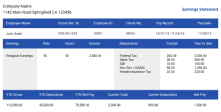
Use the 3x rule. A tenant's gross monthly income should be at least three times the rent. Read pay stubs for matching employer names, consistent year-to-date earnings, and clean pay-date gaps. Altered fonts or mismatched totals are red flags. Learning how to spot fake pay stubs will catch most attempted forgeries in under a minute.
What to check on a pay stub:
- Gross pay vs. net pay. The 3x rule applies to gross.
- Year-to-date earnings. YTD should match gross pay × pay periods so far.
- Employer name. Should match the rental application exactly.
- Pay date consistency. No unexplained gaps.
- Visual cleanliness. Altered fonts or numbers that round too cleanly suggest tampering.
Digital tools speed this up. Plaid, Argyle, and Pinwheel offer instant payroll-data verification. Many landlords also call the employer to confirm. This is the same approach covered in how landlords verify pay stubs. Self-employed applicants are not red flags, but they document income differently.
Screen Better Next Time
Tenant screening is the only permanent fix. Every method above is reactive. Strong screening is preventive, and it pays for itself the first time you avoid a bad lease.
Application red flags that predict trouble:
- Multiple unrelated income sources with no documentation
- Refusal to provide pay stubs
- Employment on the application doesn't match the employer on the pay stub
- Eviction history that surfaces in a background check but wasn't disclosed
- Urgency: "Can I sign today and move in tomorrow?"
Mandatory screening steps:
- Credit check. Score above 620, no recent rental-related collections. Services like TransUnion ResidentCredit and Experian RentBureau provide rental-specific reports.
- Background check. Felony convictions and prior evictions are the biggest filters.
- Employment verification. Call the employer using a number you find independently.
- Prior landlord call. Always call the previous landlord, not just the current one.
- Pay stub verification. The 3x rule plus the read-the-stub checklist above.
Run the same process for every applicant to stay clear of Fair Housing Laws violations. If you're not sure how many pay stubs to ask for, two to three recent pay stubs plus a bank statement is standard. Give self-employed renters a clean path to document their income upfront. This keeps the screen fair and consistent.
You Might Also Like
- Pay Stubs for Rental Applications: A Renter's Guide
- Access Your DoorDash Pay Stub
- Co-Tenant Basics: Rights and Responsibilities
- How to Show Proof of Income Without Traditional Pay Stubs
- Year-to-Date Earnings on a Pay Stub Explained
Conclusion: The Sneaky Ways to Get Rid of Bad Tenants in Practice
You don't have to suffer through a long, expensive eviction to part ways with a bad tenant. The three highest-leverage sneaky ways to get rid of bad tenants are a cash-for-keys agreement, a clean lease non-renewal, and tighter income screening on the next applicant. Stay inside the law, document everything, and skip the temptation to change locks or shut off utilities. Those shortcuts turn into five-figure judgments fast.
For your next applicant, build pay stub verification into your standard screening. Point self-employed renters to a trusted pay stub generator so income documentation stops being a guessing game. A two-minute pay stub check today saves a six-month eviction tomorrow.