Our customer support is available 24/7:


What Is An Earnings Statement? Definition And Importance

An earnings statement is a document that comes with your paycheck. In simple terms, it explains your total earnings for a specific pay period. By looking at your earnings statement, you'll know exactly where your money comes from and where it goes.
Let's get into explaining more about what an employee earnings statement is. We'll walk you through the employee earnings record definition and the information you typically find in them. By the end of this article, you'll understand why this document is important and why you need to create pay stubs for your finances.
What Is an Earnings Statement Definition?
As we said, an earnings statement is simply defined as a record of your total earnings. In it, you'll see a full record of what you earned and what was taken out of your pay. An employee receives an earnings statement each time they get paid.
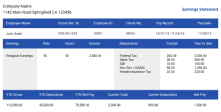
Typically, this employee earning statement can also be called a pay slip or pay stub. A company's HR or payroll department provides this document to its employees. It usually covers a specific pay period. The paystub has a list of your gross wages, all your deductions, and your net pay. That said, it simply provides a breakdown of all employee wages.
Earnings Statement as Income Statement For Businesses
However, in a business context, earnings statements have a different meaning. It refers to a business's financial report. It can also be referred to as an income statement or a profit and loss statement. Unlike the first context, where it refers to an employee's pay, this is about the entire company's financial picture.
It shows the total income a business brings in from sales and other business activities, and it subtracts all the expenses incurred to operate. It could be expenses like rent, salaries, and cost of goods sold, then it shows their net income. The business or company will know if they actually made a profit or a loss over a quarter or fiscal year.
Read more: Pay Stub Examples: What A Real Pay Stub Looks Like
Earning Statement vs Pay Stub
Typically, they mean the same. Let's put it this way: a bank or landlord could ask for an earnings statement or a copy of your pay stub. Because they need it as income verification, you should already know that they're asking for the same document.
However, while talking about finance and accounting, an earnings statement is not your pay stub. An earnings statement is an income statement for the whole business. Pay stubs are usually personal and private, but the corporate earnings statement is public. Businesses and company owners would know their company’s financial performance. It's an important financial statement, alongside the company's balance sheet.
Also check: Pick a pay stub template from our list of options.
What Information Is Included in an Employee Earning Statement? Key Components
Apart from just knowing what details are on your pay stub/earnings statement, employees need to know what they mean too. This can help you understand your finances better. Main components of an employee earnings statement include:
Employer and Employee Information
This includes both the employer and employee details. You'll find the official name and address of the company you work for. It also has your personal information. For example, your name, address, and Social Security number.
Pay Period and Pay Date
The pay period refers to the dates that you work and get paid for. The pay date is the day the money is issued.
Earnings Statement Number
This is also called a check number on a pay stub. It's a unique reference number that is used to track payroll payments.
Paid Time Off (PTO)
PTO shows how much vacation or sick time you've accrued and how much you've used.
Gross Pay (Gross Earnings)
Gross pay refers to the total amount of money you earn in a current pay period before any deductions are taken. It's also known as gross earnings or gross wages. Usually, employers calculate an employee's gross pay based on their hourly rate or salary. It includes pay for all regular hours you worked, plus any overtime, bonuses, or commissions. It's your gross amount.
Net Pay (Net Earnings)
Net pay is the final amount that is deposited into your bank account. You can also call this your take-home pay or net earnings. After all deductions have been removed from your gross pay, you're left with your net pay to spend or save.
Deductions
We mentioned that you usually have certain deductions taken out of your pay. These deductions are classified into mandatory and voluntary deductions.
Mandatory deductions are the deductions that the government requires you to pay. They include:
Federal Income Tax
FICA Taxes.
State and Local Taxes
Voluntary deductions are taken out of your check for benefits. They include:
Health Insurance Premiums
Other items like union dues, life insurance, or contributions to FSAs.
Year-To-Date Totals of a Calendar Year
YTD on pay stub shows your total gross earnings, tax withholdings, and deductions for the whole calendar year.
Read more: Fwt On Paystub: Decoding Federal Withholding Tax.
How to Read and Interpret Your Earnings Statement
Here's a simple process to read and understand your earnings statement:
Confirm that your details are correct: Look at the pay period dates. Ensure you're being paid for the correct timeframe. Check your personal details and your employer information as well; it should have the correct information.
Verify Your Gross Pay: Go to your gross earnings on your pay stub, and check the amounts listed. If you're an hourly employee, double-check that the number of hours matches your records and that your rate is correct.
Inspect Each Deduction: Go through each line of your deductions carefully. Ensure that you understand all of your taxes and deductions well. Make sure they also appear to be consistent with your past pay periods.
Confirm Your Net Pay: Find your net pay and check that it matches what was deposited into your bank account.
Review Year-to-Date Totals: Look at the year-to-date totals. This can help you see your total earnings and taxes paid for the year.
Also check: The best AI pay stub generator for you!
Why Is an Earnings Statement Important?

An earnings statement is important, and we'll explain why. An employee earnings statement helps in the following ways:
Proof of Income: When applying for an apartment, car loan, or mortgage, you are required to verify your income. During this process, lenders and landlords will request your recent pay stubs.
Budgeting: It shows you exactly where your money is going. With this, you can budget properly based on your final pay.
Tax Planning: It lets you monitor your tax withholdings all year, making it easy when it's time to file your return. It's your backup for your W-2 form.
Spot Errors: This is why it's important to check your earnings statements regularly. You'll be able to notice errors on time. This allows you to fix them quickly before they escalate.
Read more: 5 Ways A Renter Can Show Proof Of Income.
You Might Also Like
The Bottom Line
Now that you know about earnings statements, you need to know how to access them. Since electronic pay stubs are now popular, employers now provide digital access for employees to receive their documents. They're secure and convenient. Usually, employees just need to log in to the company's employee portal. However, if you still prefer physical pay stubs, contact your employer to provide you with a physical pay slip.
Now, it's quite easy to gain access to your pay stubs using company portals. However, you may need an alternative method to generate your pay stubs quickly. We have a quick and easy pay stub generator to help. Let's get started now.