Our customer support is available 24/7:

Proof Of Employment: What It Is And How To Get It (2026)

You just got asked to prove you're employed. Maybe your landlord wants proof before you sign a rental lease. Or you're applying for a loan, and the lender needs income verification documents. It's simpler than it sounds.
Once you know which documents qualify, the process is simple. This article explains everything you need to know about proof of employment. And, if you need a pay stub, PayStubCreator.net can create one in minutes.
Key Takeaways
Proof of employment confirms your job status and income. It's needed for rental applications, loans, and credit approvals
An employment verification letter from HR is the most widely accepted form
Pay stubs verify your income, but may not satisfy full employment verification needs
Without pay stubs, bank statements, and 1099 forms, work as alternatives
Most employers can provide a verification letter within 1–3 business days
- Key Takeaways
- What Is Proof of Employment?
- When Do You Need Proof of Employment?
- Proof of Employment Documents: What Counts
- What To Include in an Employment Verification Letter
- How To Request a Verification Letter from Your Employer
- Is a Pay Stub Proof of Employment?
- How To Show Proof of Employment Without a Pay Stub
- How Long Does It Take To Get Proof of Employment?
- Privacy and Legal Compliance
- You Might Also Like
- Closing
What Is Proof of Employment?
Proof of employment is a document that confirms you're employed and earning income. Common forms include:
- Employment verification letters
- Recent pay stubs
- W-2 forms
- Offer letters
Different situations call for different documents. Your job status and income are the two things that get verified. An employment verification letter covers the first. Pay stubs and tax forms cover the second. Some situations need both. Others only need one.
When Do You Need Proof of Employment?
Most proof of employment requests come up in your personal life. The most common situations include:
Rental applications: Landlords typically ask for 2–3 months of recent pay stubs for rental applications before signing a rental lease. Some also want a verification letter.
Personal and auto loan applications: Lenders need income verification documents to assess whether you qualify
Mortgage applications: Mortgage lenders usually require your most recent 30-day pay stubs. This standard was set by the Fannie Mae guidelines.
Starting a new job: Some employers check your work history.
Government benefits or visa applications: Certain immigration filings need employment verification through USCIS. This includes work visas, EAD renewals, and H-1B visa extensions. Form I-9 is a separate form that employers complete for all new hires.
Knowing which to request saves a lot of back-and-forth.
Proof of Employment Documents: What Counts

Landlords, lenders, and agencies accept four main document types. All are widely used for income verification. Here are the most common ones you'll be asked to provide:
1. Employment Verification Letter
This is the most formal option. Your HR department writes this on company letterhead. It lists your job title, status, and salary. Some organizations call this a letter of employment. It's the gold standard for formal requests.
2. Pay Stubs
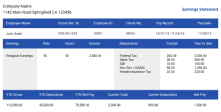
Your two or three most recent pay stubs show consistent income. They're usually accepted for most rental and loan applications. Your pay stubs include gross pay, net pay, tax withholdings, and year-to-date earnings. For more on proof of income options, our guide has all the details.
3. W-2 or 1099 Forms
Annual tax forms from the IRS that show your total earnings for the year. W-2s are for traditional employees. 1099s are for self-employed workers and contractors. These are useful when a landlord or lender wants annual income rather than just monthly income.
4. Bank Statements
Three months of bank statements are sufficient, especially for self-employed people. Some landlords and lenders accept these instead of pay stubs.
Ensure to ask the landlord or lender exactly what they need before gathering anything. Needs vary. Some want only pay stubs, while others may need a letter and tax forms.
What To Include in an Employment Verification Letter
A proof of employment letter confirms your job status. When requested as a proof of income letter from employer, it shows salary. If you need an employment verification letter, here's what it should contain. Knowing this can help you make sure HR doesn't miss anything:
Employee's full name and job title
Current employment status (full-time or part-time)
Dates of employment (start date and end date, if applicable)
Salary or wage information. Includes hourly rate or annual salary (if the requester needs it)
Employer's name, address, and contact information
Authorized HR signature and date
Company letterhead. This is what makes the letter official
One thing to note about salary information is that, as of 2026, 22+ states have pay history inquiry bans. These include California, New York, Massachusetts, Illinois, and Colorado. For job applications, your employer may leave out your salary by law. For rental or loan purposes, a salary is usually expected.
The letter should never include your Social Security number. Confirm with HR that they'll leave it out.
How To Request a Verification Letter from Your Employer

Getting this letter is easier than most people think. Here's how to do it:
Contact HR by email: It's the fastest way and gives you a written record
Explain the purpose: Tell them it's for a rental, loan, or whatever applies. This helps HR know what to include (salary, length of service, etc.)
Give them a specific deadline: For example, "I need this by Friday," beats a vague request every time
Check for a self-service portal: ADP, Workday, Gusto, and QuickBooks all let you download pay stubs right away
Small businesses can get a letter from most payroll portals. No waiting needed.
Is a Pay Stub Proof of Employment?
Yes. Pay stubs are strong proof of income. Most landlords and lenders accept them. However, they show payment history, not current job status. Two or three recent pay stubs usually work fine for rentals. For immigration checks, you'll also need a letter from HR.
A pay stub shows what you were paid on a specific date. It shows gross pay, net pay, year-to-date earnings, and pay period. It doesn't confirm if you're still employed. You could have been let go after that stub was issued.
For most situations, pay stubs and employment verification overlap. Pay stubs alone usually satisfy the request. Mortgage lenders typically ask for your most recent 30-day pay stubs. This follows Fannie Mae guidelines. Our guide on how banks verify income for a loan covers what lenders look for. Landlords are usually similar.
Need a formatted pay stub for your application? PayStubCreator.net creates one in minutes.
How To Show Proof of Employment Without a Pay Stub
Not everyone has standard pay stubs. Many ask how to show proof of employment without pay stub records. Here are the alternatives landlords and lenders accept:
Offer letter or employment contract: Useful if you just started and haven't received your first pay stub
Bank statements: Three months of statements showing regular deposits work for most rental applications
1099 tax forms or tax returns: Confirm annual income for contractors and self-employed workers
Client invoices and contracts: Show consistent work and income for freelancers
Signed letter from a client or accountant: Can substitute for a formal employer letter
Practical tip: For a rental without pay stubs, use three months of bank statements and a 1099. That combination covers most landlord needs.
Our guide on how to show proof of income covers all options for self-employed workers.
How Long Does It Take To Get Proof of Employment?
It depends on how you request it. If your employer uses ADP, Workday, or Gusto, download pay stubs the same day. For a written letter from HR, plan on 1-3 business days. Bigger firms with outside payroll may take up to a week.
Tips to speed things up:
Request in writing with a specific deadline. For example, "I need this by [date]," gets faster responses
Use self-serve portals whenever they're available
For mortgage or lease deadlines, give HR a week's notice if possible
Privacy and Legal Compliance
Here's what employers can and can't share:
Social Security number: Your employer should never include your SSN in a verification letter. If you receive one that does, ask for a corrected version before sharing it.
Pay history bans: As of 2026, more than 22 states have pay history inquiry bans. States like California, New York, and Illinois restrict what employers can share about salary. This is important for privacy compliance. These rules usually don't affect rental or loan requests.
Digital verification services: Many employers use services like Truework or The Work Number for verification. Your requester may contact them directly. This affects what info is shared and how fast it arrives.
You Might Also Like
Closing
Proof of employment may sound more complicated than it is. You have various options, including a letter from HR, recent pay stubs, or bank statements. Know who's asking and what they need. Then get the right document fast.
Need a formatted pay stub? Use our pay stub generator to create one in minutes.