Our customer support is available 24/7:


Who Benefits More From Being Paid In Cash? (2026)

You land a job offer, and the employer wants to pay you in cash. You may already be getting paid that way and wondering if it's working in your favor.
For millions of workers in food service, construction, landscaping, and the gig economy, cash wages are a normal part of the job. But if you've ever asked yourself who benefits more from being paid in cash, the answer is more complex than it sounds.
If you need to document your cash earnings, our paystub generator at PayStubCreator.net makes it simple.
By the end, you'll have a clear answer to who benefits more from being paid in cash. You'll see what it means for your taxes, your records, and your long-term finances.
Key Takeaways
- Employees typically benefit more in the short term. Cash wages mean immediate access to your money with no bank delays.
- Long-term, cash-only workers face real drawbacks. These may include no credit history, no retirement benefits, and no proof of income for loans or rentals.
- Cash wages are still taxable. Both you and your employer must report and pay taxes on cash income.
- If you need to prove your income, a pay stub generator creates the records landlords and lenders accept.
- Short-term convenience vs. long-term stability is the real trade-off when you're paid in cash.\
- What Does Being Paid in Cash Mean?
- Benefits of Being Paid in Cash for Employees
- Risks and Downsides for Employees Paid in Cash
- Advantages for Employers Who Pay Workers in Cash
- Drawbacks and Risks for Employers Who Pay in Cash
- Tax Implications When You're Paid in Cash
- Proof of Income When You're Paid in Cash
- Who Benefits More From Being Paid in Cash?
- You Might Also Like
- Conclusion: Who Benefits More From Being Paid in Cash
What Does Being Paid in Cash Mean?
Being paid in cash means receiving your wages in physical currency. It's also called "cash in hand". No direct deposit, no paycheck, no payroll card. It's common across industries such as restaurants, construction, landscaping, and gig work. Cash-based employment is legal, but both you and your employer are still required to report and pay taxes on those earnings.
Being paid in cash isn't the same as being paid "under the table," which usually implies unreported income. Legal cash wages still require full tax compliance from both parties. Your employment rights don't change just because you're paid in cash. You're still entitled to minimum wage, overtime pay, and safe working conditions under federal law.
Benefits of Being Paid in Cash for Employees
When it comes to who benefits more from being paid in cash, employees have a few real short-term benefits. Here's what they look like in practice:
Fast Access to Your Earnings
When your employer pays you in cash, you have it right away. There's no waiting for bank processing and no holding period. For restaurant servers, warehouse workers, house cleaners, landscapers, and similar workers, this fast access to earnings is a genuine benefit. It's especially valuable if you live paycheck to paycheck or don't have a bank account.
Potentially More Take-Home Pay
Some cash-paid employees feel like they take home more because no deductions are visibly withheld. For independent contractors in the construction industry or service trades, this feels like a real edge. The tax still applies, but you must pay it yourself at tax time rather than have it held back.
Flexibility and Privacy
Cash wages give some workers greater scheduling flexibility and income privacy. In 2026, roughly 15% of US workers report some form of gig income, according to Bureau of Labor Statistics estimates. Physical cash remains common in this space. Workers doing DoorDash runs, TaskRabbit gigs, or similar side work often receive a mix of digital and cash pay. The speed of cash fits well in this environment.
Risks and Downsides for Employees Paid in Cash
The short-term benefits are real, but the long-term challenges can catch you off guard. This is also where the question of who benefits more from being paid in cash gets complicated for employees.
No Documentation for Personal Needs
When you apply for an apartment, a car loan, or a mortgage, you'll be asked to prove your income. Without pay stubs or formal employer records, that becomes a serious problem. Cash-only pay creates an income records gap that can block you from housing, credit, and financial opportunities.
Need records fast? Use a pay stub generator at PayStubCreator.net to create pay stubs that show your exact earnings. These work for rental forms and loan approvals.
Missing Benefits and Long-Term Gaps
Most cash-paid jobs don't offer retirement plans, health coverage, or job loss protection. You won't get matched 401(k) funds. Over time, this creates a significant gap in your safety net compared to that of formally employed workers.
Your Tax Responsibility Grows
When your employer doesn't withhold payroll taxes, you're responsible for paying federal income tax, state income tax, and FICA taxes yourself. If you're classified as an independent contractor, you owe the full 15.3% self-employment tax on top of regular income taxes. Without good record-keeping, managing this at tax time becomes hard.
Advantages for Employers Who Pay Workers in Cash
Cash-based payroll has some appeal for small businesses, mainly those that handle cash throughout the day.
Restaurant owners, service shop managers, and similar employers can pay employees directly from daily receipts without extra bank transfers. They avoid payroll software costs and payment fees. For newer businesses without formal payroll systems, this ease has real appeal.
Cash payroll also gives some employers more options with variable-hour workers. Adjusting headcount or hours is simpler when you're not processing every change through a digital payroll system.
Drawbacks and Risks for Employers Who Pay in Cash
The short-term ease comes with serious long-term costs for employers.
IRS Scrutiny and Compliance Exposure
Large cash withdrawals from business accounts attract IRS attention. Employers who pay workers in cash without proper recordkeeping face a higher risk of audits. Misclassifying workers as contractors to avoid withholding and benefits is one of the most common violations the Department of Labor investigates. Getting caught can mean back taxes, fines, and high legal costs.
Security Risks and Missing Records
Physical cash creates genuine security risks, such as theft, miscounting, and disputes about whether someone was paid at all. Without electronic payment records, there's no reliable audit trail. These security risks grow as the size of the cash payroll increases.
Tax Compliance Gets Harder at Scale
Cash payroll might work for a small crew. At scale, it becomes a serious payroll compliance burden. Employers without proper payroll systems face bigger record-keeping problems. Each new hire adds more work. Those errors can cause real legal trouble.
Tax Implications When You're Paid in Cash
Cash wages are not tax-free wages. This is the most important thing to understand about cash-based employment.
Here's how it breaks down:
If you're an employee: Your employer must hold back taxes from your wages. This includes federal income tax, state income tax, and FICA. FICA covers Social Security (6.2%) and Medicare (1.45%), which totals 7.65% from your paycheck. Your employer matches that 7.65%. Learn how to calculate W-2 wages from a pay stub if you want to double-check your numbers.
If you're an independent contractor: If you got $600 or more in cash, your client must file a Form 1099-NEC. You owe the full 15.3% FICA as self-employment tax, plus federal and state income tax.
Under-the-table arrangements: Unreported cash wages are tax evasion. Both employers and employees face IRS fines, back taxes, and in serious cases, criminal charges.
In 2026, the Social Security wage base is $184,500. Earnings above that are still subject to Medicare tax, just not Social Security tax.
For help with your withholding duties, the IRS tax withholding estimator is free to use.
Proof of Income When You're Paid in Cash
Need to prove your income for a rental, car loan, or mortgage? Here's what works:
Bank deposit statements: Three to six months of steady deposits can show income to landlords and lenders.
Tax returns: Your IRS Schedule C (self-employed) or Form 1040 with reported wages is official income records.
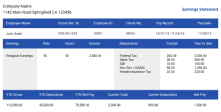
Pay stubs: You can generate your own using a service like PayStubCreator.net. Accurate pay stubs that show your gross pay and deductions are widely accepted by landlords and lenders.
An employment letter: Some employers will write a letter confirming your job title and pay rate.
Creating a paper trail is fully possible even when you're paid in cash. The key is showing consistent earnings over time.
Who Benefits More From Being Paid in Cash?
In the short term, employees often benefit more from being paid in cash. You get fast access to your money with no waiting for bank processing. But in the long term, cash-only workers face serious challenges, such as no credit history, no proof of income for loans or rentals, and no employer-sponsored retirement benefits. Employers, meanwhile, carry serious compliance and legal risk.
Here's a comparison:
| Short-Term | Long-Term | |
|---|---|---|
| Employees | Immediate cash access, freedom, privacy | Harder to build credit, prove income, and access retirement benefits |
| Employers | Simpler payroll, lower processing costs | IRS audit risk, compliance burden, security risks, and scaling problems |
The real answer to who benefits more from being paid in cash depends on your time frame. Employees win in the short term. But in the long term, the challenges fall harder on employees who need to prove income, while employers face serious legal exposure.
In the gig economy, app-based payments are replacing physical cash. That shift helps you build a better paper trail.
You Might Also Like
- What Is FWT on Your Paycheck? (Federal Withholding Tax Explained)
- How to Access Your Instacart Pay Stub and Verify Income
- Why Would You Want to Claim an Exemption on Your Pay Stub?
- How to Get Pay Stubs From Direct Deposit Payments
- Are Employers Required to Provide Pay Stubs? (State Rules)
Conclusion: Who Benefits More From Being Paid in Cash
Cash wages offer real short-term benefits, especially the immediate access to your money when you don't wait for bank processing. But the long-term picture is more complex. This matters most when you need to prove your income for a rental, car loan, or mortgage. Employers also carry more risk than most people realize. Tax compliance duties don't disappear just because the payment was in cash.
If you're a cash-paid worker who needs to document your income, don't let that stop you. Use our paystub generator at PayStubCreator.net to create accurate pay stubs in minutes.