Our customer support is available 24/7:


Getting Paid In Cash: Employer Rules And Compliance (2026)

Paying employees in cash is legal under federal law. However, getting paid in cash carries the same tax, record-keeping, and documentation obligations as any other payment method.
Employers who skip these steps may face IRS penalties, wage disputes, and potential criminal charges. Whether you use a pay stub generator or manual records, this guide covers the compliance requirements every business owner needs to follow when paying cash wages in 2026.
Key Takeaways
- Getting paid in cash is legal when employers withhold taxes and maintain records
- Employers must withhold FICA, federal, and state taxes from cash wages
- Pay stubs are required in most states, even for cash payments
- IRS penalties for non-compliance range from $50 to $290 per form
- A pay stub generator creates proper documentation for cash-paid employees
Is Getting Paid in Cash Legal?
Yes, getting paid in cash is legal under the Fair Labor Standards Act. Federal law does not restrict payment methods. However, employers must still withhold payroll taxes and comply with minimum wage and overtime rules. They must also provide pay stubs where state law requires and report all cash wages to the IRS. The Department of Labor treats cash payments the same as checks or direct deposit.
What is cash compensation in practice? It's wages paid in physical currency rather than electronically. The legal obligations remain the same regardless of how money changes hands. Getting paid cash only becomes illegal when employers deliberately avoid tax withholding and reporting.
Tax Withholding Requirements for Cash Wages

Every employer paying cash wages must withhold the following from each paycheck:
- Federal Income Tax: Based on the employee's Form W-4
- Social Security Tax: At 6.2% (up to the $176,100 wage base in 2026)
- Medicare Tax: At 1.45% of all wages
- State Income Tax: Where applicable
Employers also owe FUTA contributions and SUTA taxes on cash wage payments. These aren't optional. The IRS requires employers to report all cash wages on Form W-2 by January 31 each year. Missing this deadline can trigger penalties of $50 to $290 per employee. For help with calculations, use a weekly paycheck calculator to verify withholding amounts.
Pay Stub and Record-Keeping Requirements
Most states require employers to provide itemized pay stubs regardless of payment method. Even where not mandated by law, providing a cash salary slip can protect your business from wage disputes. Employers in Texas should review whether pay stubs are required in their state.
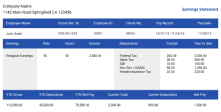
A compliant pay stub includes:
- Gross wages earned
- Total hours worked
- All deductions (taxes, benefits)
- Net pay amount
- Pay period dates
- Employer name and address
Maintain signed receipts confirming each cash payment. Federal law requires retaining payroll records for at least 3 years. Understanding pay stub deductions helps ensure your documentation is complete and accurate.
Setting a Regular Payment Schedule

Consistency matters for two reasons.
Irregular payments make overtime calculations unreliable. Under the FLSA, non-exempt employees who work more than 40 hours in a workweek are entitled to overtime pay at 1.5 times their regular rate.
Unpredictable cash payments attract IRS scrutiny. A documented payment schedule demonstrates compliance.
Why Employers Pay Cash Wages
Cash payments remain common in restaurants, construction, domestic work, landscaping, and seasonal agriculture. Small businesses in these industries prefer cash because it cuts bank trips and eliminates check processing. It also works for employees without bank accounts.
Who benefits more from being paid in cash? For employers, it's lower administrative overhead. For employees, it's immediate access to funds without bank fees. However, both parties lose protections when cash pay isn't properly documented.
Understanding the cons of this pay meaning is straightforward. Some include:
- Denied unemployment benefits
- Lost Social Security credits
- No workers' compensation coverage.
Employees may also need pay stubs for apartment applications or loan verification.
Risks and Legal Consequences of Getting Paid in Cash
The penalties for non-compliant cash payments are severe:
IRS Penalties: $50 to $290 per unfiled or late W-2
Trust Fund Recovery Penalty: 100% of unpaid payroll taxes, assessed personally against responsible individuals
Criminal Charges: Willful tax evasion carries fines and imprisonment
- Employee Claims: Wage theft lawsuits, back pay, and statutory damages
Watch for warning signs of illegal arrangements, such as:
- No pay stub issued
- No visible tax deductions
- Pressure not to report income
- No W-2 at year-end.
Worker misclassification compounds these risks. Treating employees as independent contractors to avoid withholding exposes employers to penalties from both the IRS and the Department of Labor. Employers should also understand how to calculate W-2 wages from a pay stub to ensure accurate year-end reporting.
You Might Also Like
- Year-to-Date Earnings on Your Pay Stub
- What Does a 1099 Pay Stub Look Like?
- How to Get Pay Stubs From Direct Deposit
- Can You Have Two W-2 Jobs at the Same Time?
- What Is FIT on Your Paycheck?
- Can You Get a Voided Check Online?
Final Thoughts
Cash payroll is a legitimate payment method when employers meet their tax, record-keeping, and documentation obligations. The requirements are straightforward. Ensure you withhold taxes, provide pay stubs, maintain records, and file W-2s on time.
Streamline your cash payroll documentation. Browse professional pay stub templates with accurate tax calculations built in.