Our customer support is available 24/7:


What Does Ytd Stand For On A Pay Stub? Hr Guide (2026)

Every pay stub your employees receive contains a "YTD" column. What does YTD stand for, and why does it matter beyond the current pay period? For HR managers and small business owners, those year-to-date figures are the backbone of accurate payroll tracking and year-end tax compliance.
Generate pay stubs with clear, accurate YTD columns using PayStubCreator.net. In this article, we'll explain what YTD stands for, its various types on pay stubs, and how to calculate them.
Key Takeaways
YTD stands for year-to-date. It's the cumulative totals from January 1 (or fiscal year start) through the current pay date
Pay stubs display multiple YTD figures. These include the gross earnings, deductions, taxes withheld, net pay, and hours worked
YTD figures on employee pay stubs correspond directly to W-2 box values at year-end
Accurate YTD tracking prevents payroll errors and simplifies W-2 preparation
What Does YTD Stand For?
YTD stands for "year-to-date." It refers to the cumulative period from the beginning of the calendar year (January 1) or fiscal year through the current date. In payroll and accounting, the YTD amount represents the totals accumulated across all pay periods so far this year, including earnings, taxes, deductions, and hours.
In payroll, the YTD amount meaning is straightforward. It means every figure with a YTD label is a running total, not just the current-period amount.
What's YTD useful for? It lets employers and employees see how much has been earned, withheld, and paid out from the beginning of the year to any given pay date. What does YTD amount mean on a pay stub? It means every labeled dollar figure is cumulative, not single-period.
What does YTD mean in practice? Employers track YTD payroll to monitor total labor costs against annual budgets. Employees use the YTD amount to verify their cumulative earnings statement and catch withholding errors before tax season.
What is YTD amount on a pay stub? It's the running total for a specific line item. It may be your gross earnings, a deduction, or a tax, accumulated since January 1. What the YTD amount mean on each line reflects everything withheld or earned so far this year.
New HR staff learning "What does YTD stand for?" will find the answer covers more than just the abbreviation. It encompasses how payroll figures accumulate over the full year and how they affect both employee tax withholding and employer compliance obligations.
What Does YTD Mean on a Pay Stub?
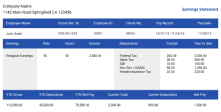
On a pay stub, YTD shows cumulative totals for every pay period from January 1 through the current pay date. Look for the column labeled "YTD," "Year to Date," or "Cumulative" alongside the current-period column. The YTD amount on a pay stub covers gross earnings, tax withholdings, deductions, and net pay accumulated across all pay periods.
Most pay stubs present a two-column layout:
- The left column shows current-period amounts
- The right shows YTD totals
What does YTD mean on a pay stub for HR? It's your verification layer. When an employee asks about their year-to-date take-home meaning or wants to confirm their YTD gross meaning, the pay stub is the primary source. The YTD meaning paycheck by paycheck is additive. Each new pay period adds to the running total. For employees wondering, "What is YTD in paycheck terms, the answer is the same. It's a cumulative figure, not a snapshot of a single period.
What does YTD stand for on a pay stub? It's always a cumulative figure from the start of the year. The same answer as "What does year to date mean on a pay stub.?" If an employee's YTD on paycheck doesn't align with your payroll records, investigate immediately. Discrepancies may compound across pay periods.
Need clear guidance on how to access pay stubs for your team or provide documentation to employees? That guide covers access options across common payroll systems.
Types of YTD Calculations on a Pay Stub

Pay stubs track several distinct YTD figures. Understanding "What is YTD on pay stub for each line?" is essential for HR compliance and accurate pay stub deductions reporting.
YTD Earnings
YTD gross earnings (also called YTD gross) represent the total wages, salary, overtime, bonuses, and commissions paid to an employee from January 1 through the current pay date, before any deductions. This is the figure that flows to Box 1 of the W-2.
YTD Deductions
Total pre-tax deductions (health insurance, 401(k) contributions) and post-tax deductions accumulated year-to-date. Tracking these helps employees and employers verify that benefit elections are calculated correctly.
YTD Taxes Withheld
The total federal income tax (FIT), Social Security, Medicare, and state income taxes withheld from the employee's paychecks since January 1. These figures map directly to W-2 Boxes 2, 4, and 6.
YTD Net Pay
YTD net pay is the year-to-date take-home meaning in concrete terms. It's the total gross earnings minus all deductions and taxes withheld. This is what has actually landed in the employee's bank account year to date.
YTD Hours
YTD hours meaning is the total hours worked since the year began. For hourly employees, this figure is critical for compliance with overtime thresholds and wage laws.
Common YTD mistakes to avoid include:
- Assuming YTD equals take-home pay (it's gross)
- Counting from an employee's hire date rather than January 1
- Overlooking mid-year deduction changes (such as a 401(k) contribution rate update) that alter YTD deduction totals going forward.
What Does YTD Stand For: Calendar Year vs. Fiscal Year
YTD always measures from the start of a year, but which year depends on the organization.
A calendar year runs from January 1 to December 31. Most US employees and small businesses use the calendar year, so YTD resets on January 1.
A fiscal year is any 12-month period a business designates for accounting and tax reporting. A company with a fiscal year starting July 1 will have its payroll YTD reset on July 1, not January 1.
For employers running payroll, it's important to confirm whether your payroll system uses calendar year or fiscal year as the YTD baseline. Using the wrong start date will produce inaccurate YTD totals and complicate W-2 filing.
Understanding how many pay periods are in a year for your pay schedule also helps validate YTD totals at any point in the year. Reviewing net vs gross income fundamentals helps clarify which YTD figure represents take-home pay versus total compensation.
How To Calculate YTD

Calculating year-to-date payroll is straightforward with organized records. Here's the process from an employer's perspective:
Gather all pay stubs or payroll records issued to the employee from January 1 (or fiscal year start) through the current pay date.
Sum the gross earnings for each pay period. Add wages, overtime, bonuses, and commissions. This is the YTD gross earnings figure.
Verify against the pay stub. The YTD gross on the employee's most recent pay stub should match your calculation. A mismatch signals a payroll processing error.
Employer example: A small business with four hourly employees pays bi-weekly. By week 26 (end of June), each employee's YTD gross reflects 13 pay periods. An employee earning $2,800 per period has a YTD gross of $36,400. Summing all four employees gives the total YTD payroll outlay, which is a key budget checkpoint.
To calculate YTD for the full team, repeat this process for each employee and add the totals. This figure helps predict whether annual payroll costs will come in under or over budget. Employers who understand "What does YTD stand for in this context?" can use the data to make mid-year compensation decisions with confidence.
YTD and Your W-2: The Tax Season Connection
The most important reason to maintain accurate YTD payroll records is the W-2 form. Every W-2 you issue to employees is built from year-end YTD figures. Understanding "What does YTD stand for at the W-2 level?" means knowing which YTD columns on your pay stubs correspond to which W-2 boxes.
YTD gross earnings: W-2 Box 1 (Wages, tips, other compensation)
YTD federal income tax withheld: W-2 Box 2
YTD Social Security taxes withheld: W-2 Box 4
YTD Medicare taxes withheld: W-2 Box 6
If an employee's final pay stub YTD figures don't reconcile with the W-2 values, there's likely a payroll error. Contact your payroll processor or HR system immediately to identify the discrepancy. Reviewing your year-end pay stub before issuing W-2s is a key step in closing out the payroll year accurately.
In 2026, IRS Publication 15-T continues to govern federal income tax withholding tables. Employers should cross-check YTD withholding totals against current-year brackets to verify employees aren't significantly over- or under-withheld.
You Might Also Like
In Conclusion
YTD figures on pay stubs are more than abbreviations. They're the cumulative payroll records that support accurate W-2 preparation, budget forecasting, and compliance with IRS withholding requirements. For every pay period, those YTD amount figures on your employees' pay stubs bring you one step closer to a clean year-end close. Employees who understand "What does YTD stand for?" can also spot withholding errors early, reducing W-2 corrections at year-end.
Ready to generate pay stubs with professional, accurate YTD columns? Use our pay stub generator to create compliant pay documentation in under two minutes.