Our customer support is available 24/7:


What Does Child Support Look Like On A Pay Stub? (2026)

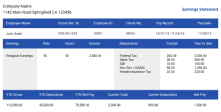
What does child support look like on a pay stub? When an employer gets an income withholding order (IWO), a new line item appears in the deductions section.
Knowing "What does child support look like on a pay stub?" helps verify the right amount is being withheld.
Whether you're an employer managing payroll or an employee reviewing deductions, this guide covers how child support shows up on your paycheck. It also discusses federal limits, employer duties, and what to do if the numbers look wrong.
Key Takeaways
- Child support appears in the deductions section of a pay stub, typically labeled "CHLD SUP," "CS Garnishment," or "CHILD SUPPORT"
- It is an after-tax deduction. The noncustodial parent still owes full income tax on gross pay
- Federal law caps child support wage withholding at 50-60% of disposable earnings under the CCPA
- Employers must begin withholding no later than the first pay period after 14 days of receiving an IWO
- The exact label format varies by payroll system (ADP, Workday, Paychex, QuickBooks)
- Key Takeaways
- What Is Child Support on a Pay Stub?
- What Does Child Support Look Like on a Pay Stub?
- How Child Support Is Calculated
- Federal Garnishment Limits for Child Support
- Employer Responsibilities for Child Support Withholding
- Child Support for Self-Employed Business Owners
- What Does Child Support Look Like on a Pay Stub If the Amount Is Wrong?
- You Might Also Like
- In Conclusion
What Is Child Support on a Pay Stub?
Child support on a pay stub is a court-ordered child support deduction. Employers must process this payroll deduction when they receive a garnishment order through an IWO. It appears as a mandatory line item in the deductions section. It is separate from voluntary items such as 401(k) plans or health insurance.
The employer doesn't decide the amount. A family court sets the obligation and the exact dollar figure to deduct each pay period. This money goes to the state disbursement unit.
What Does Child Support Look Like on a Pay Stub?
The label and placement vary by employer. It shows up in the deductions section, listed after federal and state taxes. Common labels include "CHLD SUP," "CS GARN," or "CHILD SUPPORT." The exact label depends on the payroll system. It is an after-tax payroll deduction. The paying employee still owes full income tax on gross pay.
You'll find it in the "Other Deductions" or "Post-Tax Deductions" area. It shows the current period amount and often a year-to-date (YTD) total. Child support comes out after taxes, FICA, and Medicare. It's not tax-deductible for the payer and also not taxable income for the receiver.
If you're wondering, "What does child support look like on a check stub?" the format is the same in both paper and digital versions. For more on understanding pay stub deductions, see our full breakdown.
Labels by Payroll System
The label on the pay stub depends on the payroll software the employer uses:
| Payroll System | Common Label |
|---|---|
| ADP | CHLD SUP or CS GARN |
| Workday | Child Support or CS Withholding |
| Paychex | Child Support Garn |
| QuickBooks Payroll | Child Support |
If you're unsure how the child support on paystub records looks from your employer, compare the deducted amount to the figure on the court order or IWO.
How Child Support Is Calculated
The family court, not the employer, determines the child support calculation. Several factors go into the amount. They include:
Number of children: Guidelines vary by state. For combined income at or below $140,000, 17% for one child, 25% for two, 29% for three, 31% for four, and 35%+ for five or more.
Income of both parents: The court considers wages, bonuses, investments, and other sources. You can calculate year-to-date income from a pay stub to get an accurate picture.
Existing support obligations: Prior child support orders reduce the paying parent's available income.
Health insurance premiums: The portion covering the children factors into the calculation.
Child care costs: Work-related child care expenses are included.
- Custody time: Parents with physical custody for 90+ days per year may get a shared calculation. This can reduce the obligation.
For employers, the key point is simple. Process the exact amount on the IWO. The court handles the math.
What does child support look like on a pay stub? The dollar amount comes from the court, not from payroll calculations.
Federal Garnishment Limits for Child Support
The Consumer Credit Protection Act (CCPA) caps wage withholding amounts for child support:
| Situation | Maximum Garnishment |
|---|---|
| Supporting another spouse or child | 50% of disposable earnings |
| Not supporting another spouse or child | 60% of disposable earnings |
| 12+ weeks in arrears | Additional 5% |
Example: An employee earns $2,500 in gross pay per pay period. After $500 in taxes and FICA, disposable earnings are $2,000. At the 60% rate, the max garnishment is $1,200. Child support takes priority over other garnishments. These include tax levies and creditor judgments. Learn more about gross and net income to see how this works.
Need accurate pay documentation for your records? Create professional pay stubs in under 2 minutes at PayStubCreator.net.
Employer Responsibilities for Child Support Withholding
Employers must comply with income withholding orders. Federal law requires wage withholding to begin within the first pay period after 14 days of receiving the IWO. Most states set a 7 to 14-day window.
The employer sends the withheld amount to the state disbursement unit, not to the custodial parent. The garnishment order stays in effect until a court changes or ends it.
Understanding "How does child support appear on pay stub records?" helps you confirm compliance. Not complying can lead to fines. Make sure you understand what FWT means on a pay stub to distinguish tax withholdings from garnishments.
Child Support for Self-Employed Business Owners
Self-employed people don't have an employer to process automatic withholding. They must pay directly to the state disbursement unit or the custodial parent.
If a self-employed parent fails to pay, enforcement options include:
- Bank levies
- Property liens
- Tax return intercepts
- License suspension
Courts may also request bank statements to verify self-employment income.
Self-employed parents should keep detailed income records and save every pay stub as proof. Learn how to calculate your W-2 wages from a pay stub for accurate income reporting.
What Does Child Support Look Like on a Pay Stub If the Amount Is Wrong?
If the child support deduction on your pay stub doesn't match the court order, contact HR or payroll right away. Request a copy of the IWO they received. Then contact your state's child support enforcement agency.
Compare the deduction to the amount in the IWO. Errors can happen when an employer gets an updated order but hasn't processed it yet. A modification of child support may also change the amount owed. Knowing how to find your employee ID on a pay stub can help HR locate your records faster.
You Might Also Like
- What Is FIT on My Paycheck?
- How Many Pay Stubs Do You Need for an Apartment?
- What Are Payroll Warrants?
- OASDI Tax Meaning on Your Paycheck
- How Much Do Minors Get Taxed on Their Paycheck?
- Can You Get a Voided Check Online?
In Conclusion
Now you know "How does child support show up on paycheck records?" It's a labeled after-tax deduction, governed by the CCPA and processed through employer compliance with income withholding orders. Review your pay stubs regularly. Keep every child support check stub as proof of payment in case disputes arise.
Need professional pay documentation? Generate accurate pay stubs at PayStubCreator.net in under 2 minutes, with no subscription required.